Your support team is fast. But they're also human. They need to search for answers, pull up past tickets, check policy docs, and then type a response, all while the customer is waiting. That gap between "I need help" and "here's your answer" is exactly where customer trust erodes.
AI agent assist is built to close that gap. It works in the background, surfacing the right information at the right moment so your team can respond faster and more accurately, without burning out. Steps AI Agentic Chatbot is designed to do exactly this, sitting alongside your team rather than replacing them, giving them what they need before they even have to ask.
Here's what this post will cover: what AI agent assist actually is, how it works in practice, where most implementations go wrong, and what your team genuinely needs to get value from it.
What AI Agent Assist Actually Does

A lot of people hear "AI agent assist" and picture a bot that talks to customers. That's not it. AI agent assist works on the agent side of the conversation, not the customer side.
When a customer sends a message, the AI reads it in real time and immediately gives your human agent relevant suggestions. This could be a suggested reply, a link to the right knowledge base article, a summary of the customer's history, or a flag that says "this looks like a billing escalation."
The agent still controls the response. They can take the suggestion, edit it, ignore it, or escalate the ticket. The AI doesn't automate the conversation; it makes the person handling the conversation faster and better-informed.
This is a meaningful distinction. Fully automated bots work well for simple, predictable queries. But when conversations get complex, emotional, or nuanced, human judgment matters. AI agent assist is what you use when you want both speed and quality.
Why Response Time Is a Revenue Problem, Not Just a Support Metric
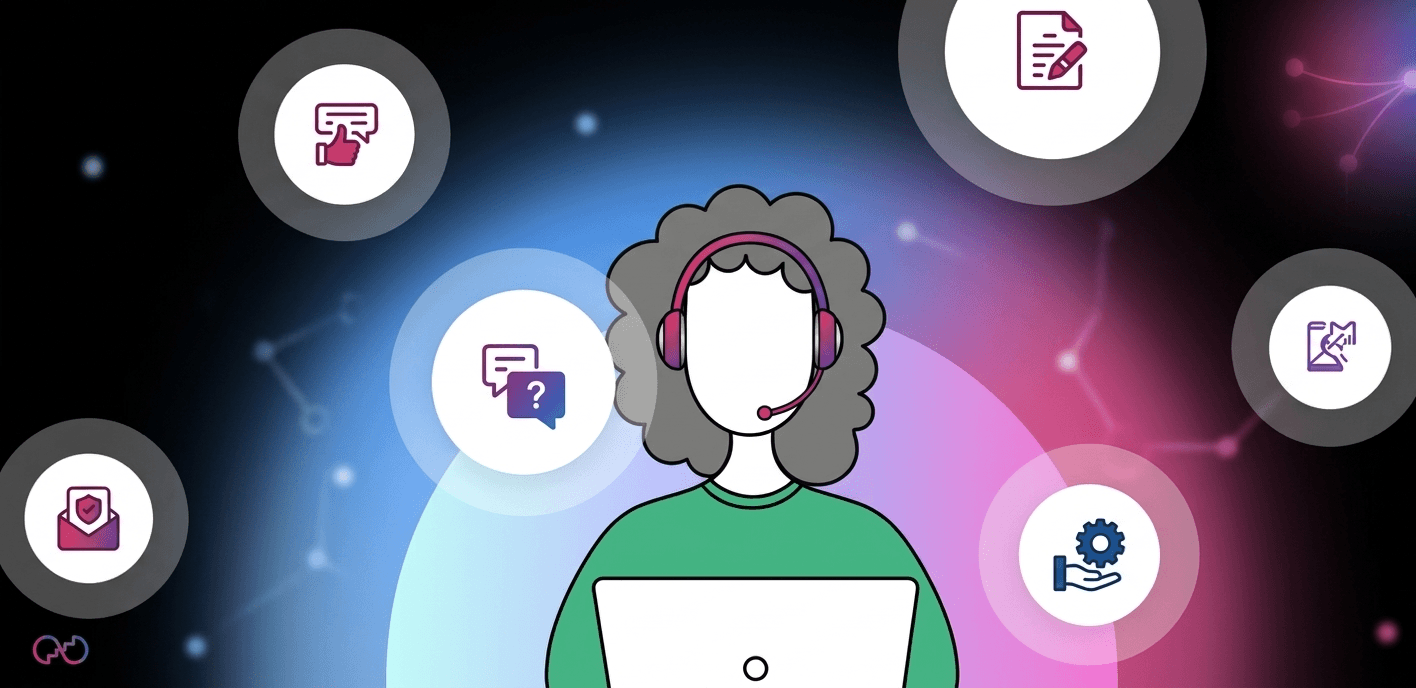
Most businesses track response time as a satisfaction metric. That's fine, but it undersells the stakes. Slow responses don't just frustrate customers; they cost you conversions.
A prospect asking a pre-sale question who waits 20 minutes for a reply has likely already moved on. A customer trying to resolve an issue before cancelling their subscription who doesn't hear back quickly often cancels before you can intervene. The cost is real and it compounds daily.
Your agents aren't slow because they don't care. They're slow because the information they need is scattered. It lives in three different tools, five internal docs, and someone's memory from a training session six months ago. Most chatbot and support systems fail not because of bad intentions but because the underlying data architecture makes fast, accurate responses structurally impossible.
AI agent assist solves this by centralizing the retrieval layer. The agent asks, the AI finds, the agent responds. That workflow, done right, can cut average handle time significantly without sacrificing accuracy.
How AI Agent Assist Works in a Real Support Workflow
Let's make this concrete. A customer opens a chat and says, "I was charged twice this month and I need this fixed today."
Without AI agent assist, your agent needs to: check the billing system, find the duplicate charge, understand the refund policy, draft a response, and probably check with a supervisor. That takes time.
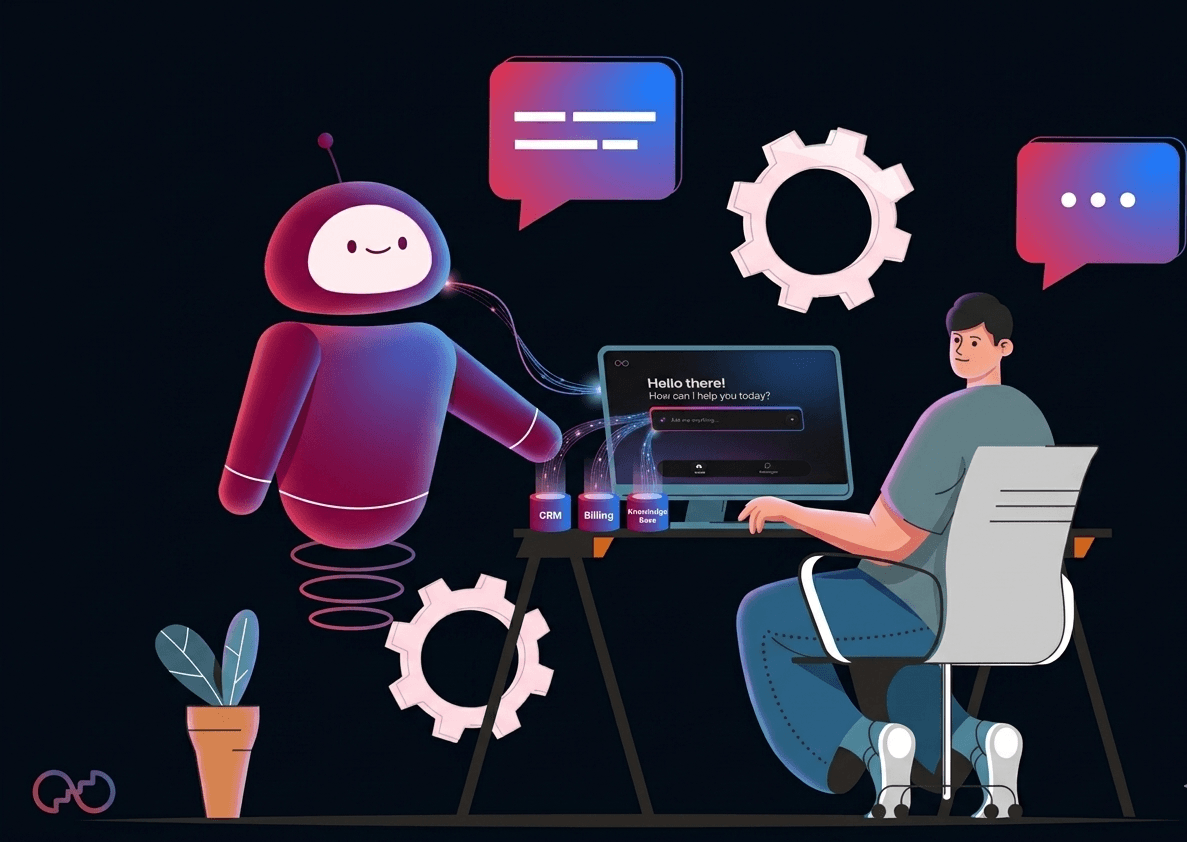
With AI agent assist, the moment that message lands, the AI surfaces the customer's billing history, flags the duplicate charge it detected, pulls the relevant refund policy snippet, and suggests a response draft. Your agent reads it, confirms it looks right, and sends it in under 30 seconds.
The workflow doesn't change. The speed and accuracy do.
This is why implementation quality matters. The AI needs to be connected to your actual systems, your CRM, your billing tools, your knowledge base. An AI that only knows what's in a generic FAQ won't help much. The role of the conversational interface layer is to bridge your live data with the moment of response, and that only works if the architecture is built correctly from the start.
Steps AI Agentic Chatbot handles this integration layer seriously. It's designed to pull from real business data rather than operating in an information vacuum, which is what separates useful assist tools from ones that create more work than they save.
Where Most AI Agent Assist Implementations Go Wrong
Here's where it gets honest. A lot of businesses deploy AI agent assist and see minimal improvement. The tool gets blamed, but the problem is almost always in how it was set up.
The most common mistake is shallow data access. If the AI can only read from a static knowledge base that gets updated quarterly, it will surface outdated or incomplete information. Agents will see wrong suggestions often enough that they stop trusting the tool entirely. Once trust breaks, adoption dies.
The second mistake is poor suggestion design. If every message triggers five suggestions with no clear priority, agents spend more time evaluating suggestions than just answering the question themselves. Good AI agent assist is opinionated. It gives you the one or two most relevant things, not a dump of everything remotely related.
Third is ignoring escalation signals. AI agent assist should be doing more than suggesting replies. It should recognize when a conversation is heading toward churn, a legal risk, or a complaint that needs a senior agent. If the tool doesn't flag escalation scenarios, you're leaving the most important judgment calls to chance.
Understanding the difference between an AI agent and a standard chatbot is key here. A true agent assist tool reasons over context. A basic chatbot just pattern-matches. Deploying the wrong type and expecting agent-level support from it will always disappoint.
What Your Team Actually Needs to Get Value From AI Agent Assist
Getting value from AI agent assist isn't just a technology decision. It's also a process and adoption decision.
Your team needs to trust the output before they'll use it. That means starting with high-confidence use cases, billing lookups, policy questions, order status, where the AI is genuinely reliable. Prove value there first. Expand later. If you roll it out across everything at once and it gets things wrong early, you'll spend months rebuilding agent confidence.
Your knowledge base also needs to be in reasonable shape. AI agent assist is a retrieval and reasoning tool. If your internal docs are inconsistent, outdated, or incomplete, the AI will surface bad information confidently. Garbage in, garbage out applies here as much as anywhere else.
Finally, measure the right things. Average handle time matters. But so does first-contact resolution rate and agent satisfaction. Reducing support tickets with a well-implemented AI layer only works when agents are genuinely supported, not just given another tool to manage.
Steps AI Chatbot is built with these realities in mind. The system is designed to connect to your actual data sources, deliver suggestions with context, and flag high-priority scenarios rather than treating every message as equivalent.
Conclusion
AI agent assist is one of the most practical ways to improve support performance without replacing your team or overhauling your entire operation. But "practical" only applies when it's implemented correctly.
What to evaluate: how deeply the tool integrates with your live systems, whether it prioritizes suggestions intelligently, and how it handles escalation scenarios.
What to avoid: tools that operate on static knowledge alone, AI that floods agents with low-confidence suggestions, and rollouts that skip the trust-building phase with your team.
What good looks like: agents responding faster, with more confidence, on more complex queries, while churn signals and escalation risks get caught before they become expensive.
Steps AI Agentic Chatbot is built for exactly this use case. If your team is spending too much time finding answers instead of giving them, it's worth a look.
See how Steps AI Agentic Chatbot can help your team respond faster
Frequently Asked Questions
What is AI agent assist in simple terms?
AI agent assist is a tool that helps your human support agents during live conversations. It surfaces relevant information, suggests replies, and flags important signals in real time so agents can respond faster and more accurately.
Is AI agent assist the same as a chatbot?
No. A chatbot talks directly to the customer. AI agent assist works behind the scenes, helping the human agent who is managing the conversation. The agent still controls what gets sent.
Does AI agent assist replace human support agents?
No. It makes them faster and better-informed. The goal is to reduce the time agents spend searching for information, not to remove human judgment from the conversation.
How does AI agent assist improve response time?
By surfacing the right information the moment a customer message arrives, agents don't have to search multiple systems before responding. That retrieval time is typically where most response delay comes from.
What's the biggest reason AI agent assist fails to deliver results?
Usually shallow data access. If the AI can't connect to your live systems and is only reading from a generic knowledge base, it will surface outdated or wrong information. Agents stop trusting it, and adoption drops.