
The conversational interface layer matters more than the website chatbot UI because it’s the part that understands user messages, remembers context, and picks the best reply. The UI is just how it looks, but this layer turns a simple chat box into a real assistant that can handle everyday language, emotions, and tasks which is why businesses now rely on chatbot customer service solutions like StepsAI to deliver faster and smarter support. That’s why a UI alone isn’t enough for a good chatbot experience more than a chat, StepsAI chatbot knows where it’s at.
Why Website Chatbot UI Isn’t Enough: The Role of the Conversational Interface Layer
The conversational interface layer is the brain and voice of a chatbot. At StepsAI, this layer is where all intelligence lives. It is responsible for understanding what users mean, not just what they type, and for deciding what should happen next in the conversation.
This layer handles intent detection, context tracking, memory, tone, and flow. When someone sends a message, the conversational interface layer at StepsAI interprets the words, connects them to the right goal, and chooses a response that actually helps the user move forward instead of sending them in circles.
While the website chatbot UI is only the outer frame, StepsAI’s conversational interface layer is what powers the real experience. It connects user messages to actions like answering questions, completing tasks, collecting information, or handing the conversation to a human agent when needed.
When this layer is strong, the chatbot feels helpful, natural, and intelligent. When it is weak, the chatbot feels robotic and shallow, no matter how good the UI looks. That is why StepsAI designs the conversational interface layer first and treats design as the surface, not the foundation.
Conversational Interface Layer
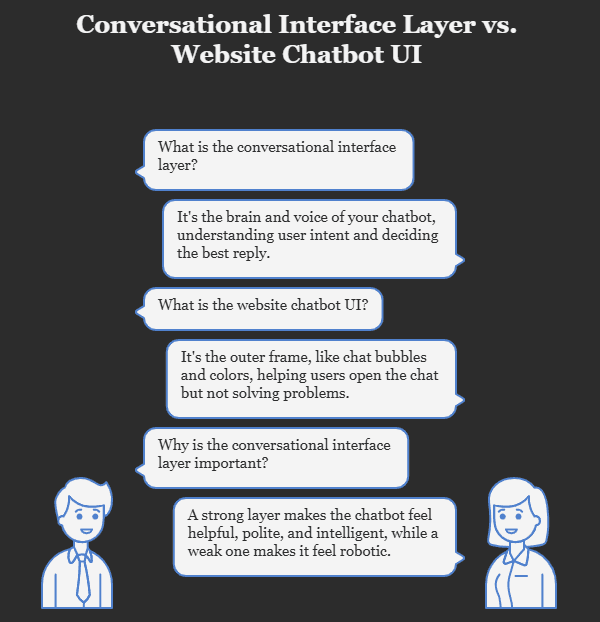
The conversational interface layer is the brain and voice of your chatbot. It takes what users type or say, understands user intent, and decides the most appropriate reply or action which is exactly how an AI customer service bot like StepsAI delivers accurate and context aware support. The website chatbot UI is only the outer frame, such as the chat bubble, colors, and position on the screen. It helps users notice and open the chat, but it does not solve their problems by itself.
When the conversational interface layer is strong, the chatbot feels helpful, polite, and intelligent, even with a simple UI. When it is weak, the chatbot feels robotic and empty, even with a visually appealing design.
How the Conversational Interface Layer Works
The conversational interface layer controls what happens behind the scenes in a chat. It connects words to actions and keeps track of the conversation over time.
It can:
- Understand different ways people ask the same thing, such as “Where is my order,” “Track my package,” or “Order status.”
- Recognize common shortcuts and informal language like “pls,” “thx,” or “asap,” and understand the real intent behind them.
- Interpret tone when users express frustration, excitement, or urgency through their wording.
- Remember what the user has already shared, so they do not have to repeat information.
- Ask short follow-up questions to clarify instead of sending long, confusing replies.
- Decide when to transfer the conversation to a human agent and pass full context, not just “User needs help.”
This is the gap StepsAI is designed to fill: understanding intent, tracking context, and choosing the right next action.
Beyond Bots: Hellos, Thanks, and Heart
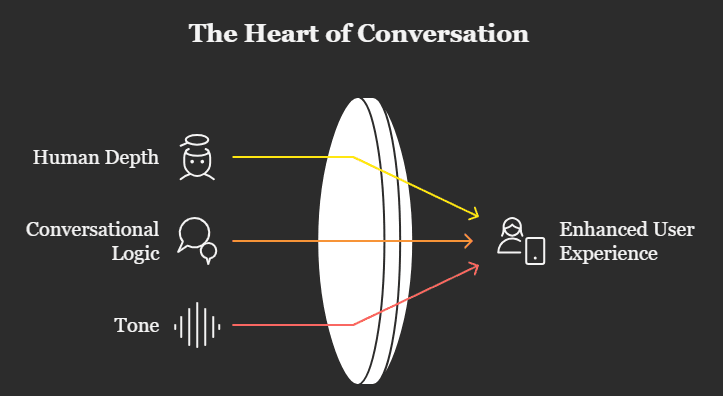
Human depth lives inside the conversational interface layer. When a person types “Good morning” and gets no greeting back, the moment feels cold, even if the interface is perfect. Over time, this silence makes users feel ignored, like talking to a wall.
People still say “thank you” to bots after getting help, even knowing it is software. This shows they bring real manners and emotions into the chat and expect basic kindness in return. A good conversational interface layer answers with simple warmth like “Good morning, I am here to help you” or “You are welcome, happy to help.”
These small touches matter. They keep the emotional loop alive and make users more willing to trust the chatbot next time. This depth cannot come from UI design alone; it must be designed into the conversation logic and tone.
Why Steps AI Wins on Conversations, Not Just Design
StepsAI proves that a modern chatbot is much more than a floating widget. It uses intent recognition to understand what users are really asking, even when they use different words or informal language, and it keeps conversation memory so users don’t have to repeat themselves and can move naturally from one step to the next. Because of this, StepsAI is more than just a visual chat box. StepsAI works on how the bot listens, interprets, and responds in natural language, including simple human moments like greetings and thanks.
Conclusion
A good website chatbot UI is helpful, but it’s only the surface. The real impact comes from the conversational interface layer, the part that understands intent, respects emotions, and guides users to real results.
Don’t stop at how it looks. Choose a solution like StepsAI that puts conversation first and treats intelligence as the core. That’s how your chatbot becomes a true assistant, one that replies to “Good morning,” earns real “thank yous,” and delivers outcomes your users can trust.
FAQs
When should a chatbot hand off to a human agent? A strong conversational layer knows when the problem is too complex or sensitive for automation. StepsAI can pass the full conversation context to a human agent so the user doesn’t have to repeat themselves.
Is StepsAI chatbot just a chatbot widget for websites? No. The widget is only the window. StepsAI is the system behind it that understands users, remembers context, and guides conversations toward real outcomes.
What is the conversational interface layer in a chatbot? The conversational interface layer is the part of a chatbot that understands what users mean, keeps track of context, and decides what to say or do next. It handles intent, memory, tone, and flow. Without this layer, a chatbot is just a scripted box, not a real assistant.
Why isn’t a website chatbot UI enough on its own? The UI only controls how the chatbot looks. It does not understand users, remember details, or solve problems. A good-looking chat widget without a strong conversational layer will still feel robotic and unhelpful.
Why do many website chatbots feel robotic? Because they rely on scripts instead of real conversation logic. When users speak naturally, these bots can’t adapt, so they repeat the same lines or send people to FAQs instead of solving problems.
Can StepsAI chatbot handle emotions and tone in conversations? Yes. StepsAI chatbot is designed to recognize tone like frustration, urgency, or politeness. It responds in a way that feels human, with greetings, acknowledgments, and helpful follow-ups instead of cold or silent replies.
How does context improve chatbot conversations? Context lets the chatbot remember what the user already shared. This prevents users from repeating themselves and allows the conversation to move forward naturally instead of starting over each time.
Can a chatbot understand different ways of asking the same thing? Yes, if it has a strong conversational interface layer. It can recognize that “Where is my order,” “Track my package,” and “Order status” all mean the same thing.