Most businesses deploy a chatbot expecting it to handle customer questions, reduce support load, and improve response times. Six months later, the ticket volume hasn't moved. Customers are still frustrated. The chatbot is answering "What are your business hours?" and nothing else.
The problem isn't that chatbots are bad. The problem is that most businesses don't know what they actually deployed, what it can and cannot do, and when it stops being the right tool entirely. The ai agent vs chatbot question isn't semantic. It determines whether your customer experience automation works or quietly fails at scale.
Steps AI Agentic Chatbot is built specifically for businesses that have already experienced this gap and need something that actually resolves queries, not just acknowledges them. This blog breaks down exactly what separates a chatbot from an AI agent, where each belongs, and which one your business actually needs right now.
What a Traditional Chatbot Actually Does (and Where It Stops)
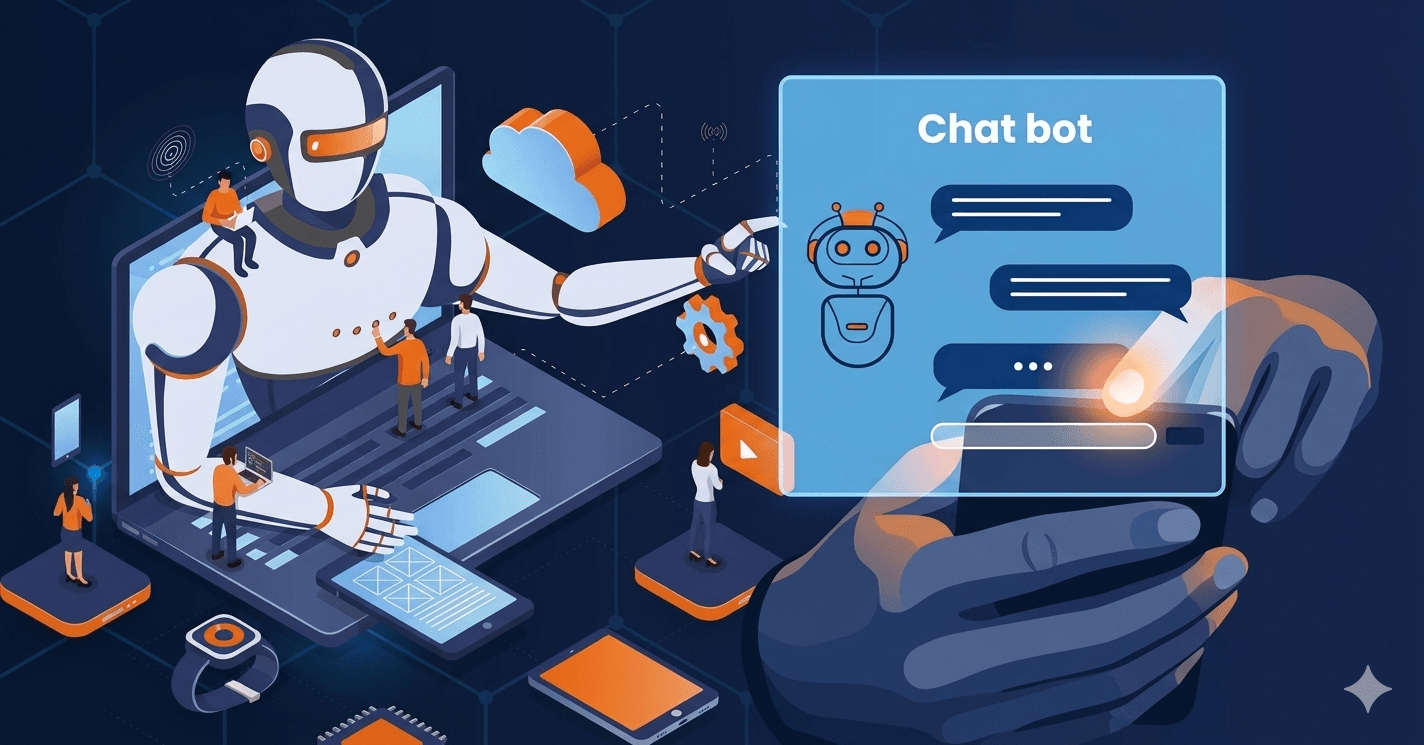
A traditional chatbot is a scripted response system. It matches user input to predefined rules or FAQs and returns a fixed answer. Some are powered by keyword detection. Others use basic natural language processing to improve matching accuracy. Either way, the range of what they can handle is fixed at setup.
This matters because most chatbots cannot take action. They can tell a customer that a return policy allows 30 days, but they cannot initiate the return. They can display an order status template, but they cannot query your order management system to fetch live data. The moment a query requires any real-world action or live data retrieval, a traditional chatbot either fails silently or kicks the conversation to a human.
The failure mode is predictable. A customer arrives with a specific problem. The chatbot either gives a generic answer or says "I'll connect you to an agent." The customer waits. The support team gets the ticket. Nothing was automated. The chatbot was essentially a slightly more interactive FAQ page.
Understanding why website chatbots fail in real deployments almost always comes back to this architectural ceiling. They are designed to respond, not to resolve.
What an AI Agent Is and Why the Architecture Is Fundamentally Different
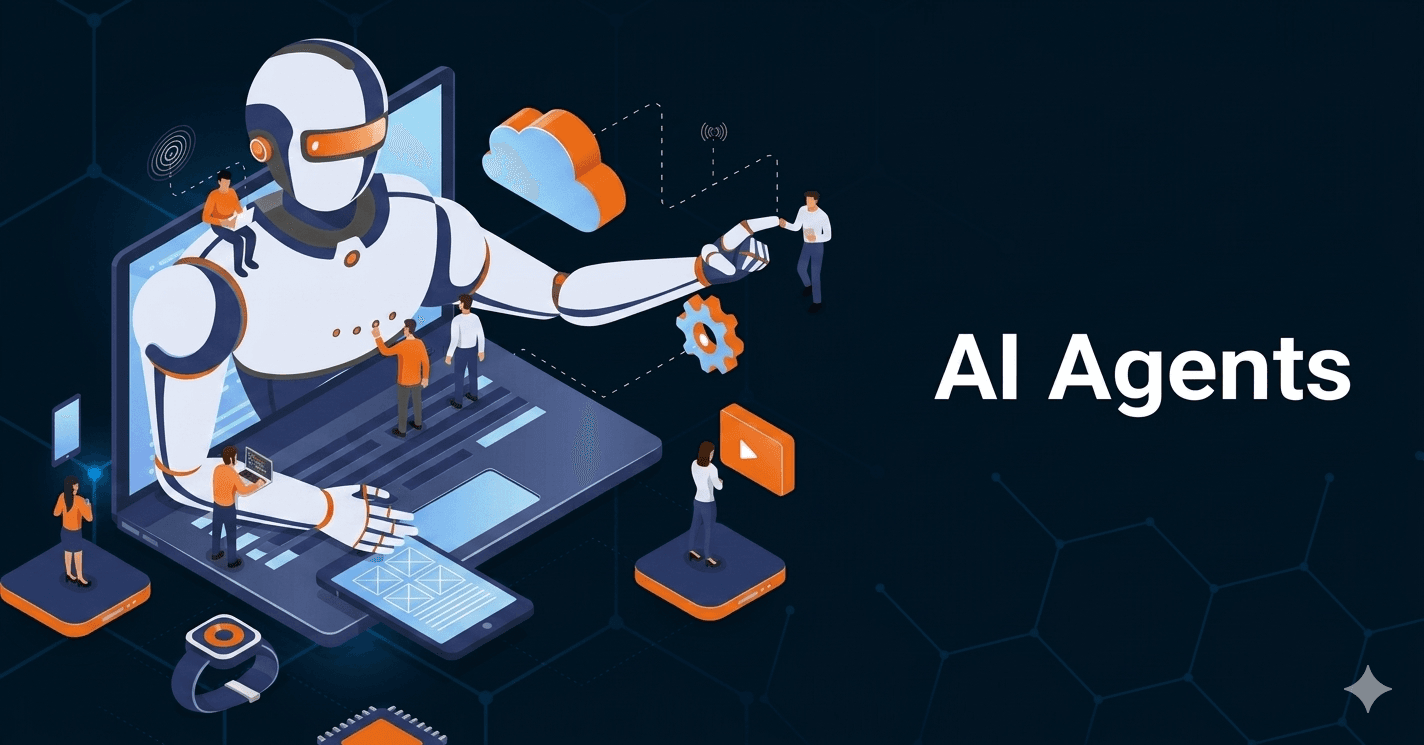
An AI agent is not a smarter chatbot. It is a different type of system entirely. Where a chatbot matches input to output, an AI agent perceives context, reasons about what needs to happen, decides on a course of action, and executes steps to complete a task.
The critical distinction is agency. An AI agent can use tools, call APIs, query databases, run multi-step workflows, and adapt its approach based on what it learns mid-conversation. It doesn't need every possible scenario pre-scripted. It is built to handle variability, because real customer interactions are variable.
For example, a customer asks an AI agent: "Why hasn't my order arrived yet?" The agent can check the CRM for order details, call the shipping API to get a live tracking status, detect if there's a delay, and proactively offer a resolution option such as a replacement or a refund, all in a single conversation thread. A chatbot would show a canned response or a tracking link and call that resolution.
This matters for customer service, sales, and operations because most high-value interactions involve more than one step. A sales qualification conversation requires gathering information, scoring intent, and routing the lead. A support interaction often requires account lookup, context retrieval, and action execution. AI agents are designed for these multi-step, context-aware workflows. Chatbots are not.
AI Agent vs Chatbot for Customer Service, Sales, and Operations
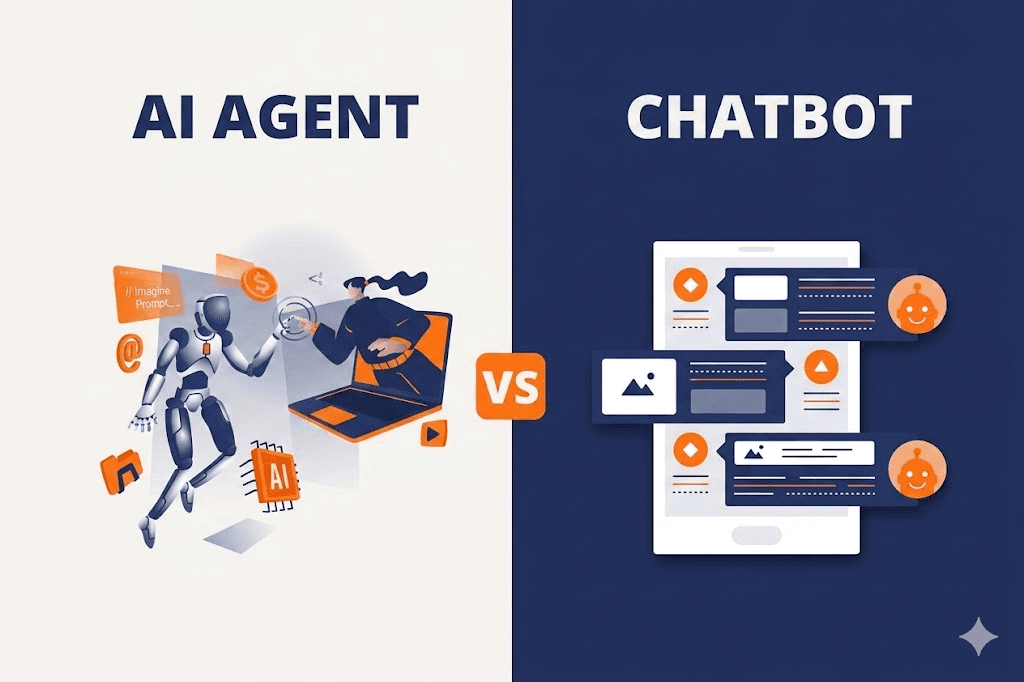
The comparison gets practical when you put it into specific business contexts. Here is where each genuinely belongs.
Customer Service
A chatbot handles tier-0 questions well. Business hours, return policy, link to documentation, password reset instructions. If your support load is dominated by these, a basic chatbot has merit. But the moment volume includes billing disputes, account changes, order issues, or anything requiring a lookup, a chatbot creates more friction than it removes. An AI agent can handle tier-1 and tier-2 queries autonomously because it can access your systems, not just your FAQs.
Sales and Lead Qualification
Chatbots can collect a name and email. That is not sales qualification. A genuine qualification workflow requires asking adaptive follow-up questions based on earlier answers, scoring intent, checking CRM for existing records, and routing high-value leads to the right team immediately. AI agents execute this as a dynamic workflow, not a static form in disguise.
Internal Operations
Employee-facing bots have the same problem as customer-facing ones. An HR chatbot that cannot access leave balances or process a leave request is just a prettier intranet. An AI agent integrated with your HRMS, ERP, or ticketing system can complete the action, confirm it, and log it, without a human in the loop.
The cost of getting this wrong isn't just a poor user experience. Chatbots that underdeliver actively hurt customer experience by creating a barrier between the customer and the resolution they need.
The Key Differences at a Glance
Rather than a vague comparison, here are the functional differences that matter in a real deployment:
Memory and context
Chatbots typically have no persistent memory. Each message is often treated in isolation or within a single session. AI agents maintain context across a conversation, can reference what was said earlier, and can carry context across sessions when integrated with a CRM or data store.
Decision-making
A chatbot follows a decision tree or a retrieval model. It does not reason. An AI agent evaluates the situation, determines what information it needs, decides which tool or action to use, and adjusts based on the result. That is reasoning, not retrieval.
Tool use and integrations
This is the clearest technical divide. AI agents can use tools. They can call APIs, run queries, trigger workflows, send emails, create tickets, update records. Chatbots, unless heavily custom-built, cannot. They are read-only systems talking at users, not systems working on behalf of users.
Escalation quality
Both systems can escalate to a human. But an AI agent hands off with full context, a summary of what it already tried, and relevant account data pre-loaded. A chatbot escalation is often a cold handoff where the human agent starts from zero. What makes a website chatbot effective includes escalation design, and most chatbots fail this standard entirely.
Handling ambiguity
When a user's request is vague or incomplete, a chatbot either returns a wrong match or says it doesn't understand. An AI agent asks a clarifying question, infers intent from context, and proceeds. This directly affects deflection rates and customer satisfaction scores.
Which One Does Your Business Actually Need
The honest answer depends on where your unresolved volume comes from.
If more than 60% of your inbound queries are simple, static questions with no required system action, a well-configured chatbot can deflect a meaningful chunk of that volume. The investment is lower and the setup is faster. This works for early-stage products, simple service businesses, or landing page lead capture where the goal is just collecting contact information.
If your customers are asking questions that require data lookup, account action, multi-step reasoning, or anything that currently takes a support agent 5-15 minutes to resolve, you need an AI agent. Deploying a chatbot in this scenario does not reduce your support load. It creates an extra step before the load arrives unchanged.
The biggest mistake businesses make is treating AI agents and chatbots as the same category with different price tags. They are not. They solve different problems. Choosing the cheaper option when your problem requires agency wastes the investment entirely and often makes the customer experience worse.
The Steps AI Agentic Chatbot is built for businesses that need real resolution, not just response. It integrates with your existing systems, executes multi-step workflows, maintains context, and escalates with full data handoff when a human is genuinely needed. It is designed to sit at the agent end of this spectrum while remaining deployable on a website without engineering overhead.
If reducing ticket volume is the actual goal, understand how AI chatbots can genuinely reduce support tickets before choosing your architecture. The reduction only happens when the system can complete the resolution, not just describe it.
Conclusion
The ai agent vs chatbot question has a clear answer once you define what resolution actually means for your business. Chatbots respond. AI agents resolve. Chatbots are static. AI agents adapt. Chatbots tell customers what should happen. AI agents make it happen.
Most businesses deploy a chatbot, measure deflection rate at week one, and declare success before realizing that deflection without resolution is just delay. Evaluating this correctly means asking one question before you buy anything: does this system actually complete the tasks my customers need, or does it hand them off one step later?
Avoid any vendor that calls their FAQ bot an AI agent. Look for verifiable tool use, API integration capability, memory and context handling, and measurable resolution rates, not just response rates.
The Steps AI Chatbot is the practical answer for businesses that need an AI agent on their website without a six-month implementation project. It is agentic by design, not by marketing.
See how Steps AI Agentic Chatbot works for your business
FAQs
What is the main difference between an AI agent and a chatbot?
A chatbot responds to inputs using scripts or retrieval. An AI agent reasons, makes decisions, uses tools, and completes multi-step tasks. The core difference is whether the system can take action or only provide information.
Can a chatbot qualify sales leads effectively?
A basic chatbot can collect contact details. It cannot run a genuine qualification workflow that adapts based on answers, scores intent, or routes leads intelligently. That requires an AI agent.
Is an AI agent more expensive than a chatbot?
Often yes, in upfront cost. But a chatbot that cannot resolve queries does not reduce support costs. An AI agent that resolves tier-1 and tier-2 queries autonomously delivers measurable ROI. The comparison should be cost against actual resolution, not cost against deployment.
When should a business use a chatbot instead of an AI agent?
If the majority of inbound queries are static and require no system action, a chatbot is sufficient and easier to deploy. For anything involving data lookup, account changes, or multi-step interactions, an AI agent is the correct architecture.
How does Steps AI Agentic Chatbot differ from standard chatbot platforms?
Steps AI Agentic Chatbot is built on an agentic architecture. It connects to your business systems, executes workflows, maintains conversation context, and hands off to humans with full data loaded. It is not a scripted FAQ bot with a modern interface.