Most businesses that want AI-powered customer engagement are stuck in the same trap. They know they need an intelligent agent on their website or in their product. They don't have a machine learning team. They don't have six months to build something custom. And the last chatbot they deployed answered three questions before hitting a wall and telling users to "contact support."
That gap between needing an AI agent and being able to deploy one is exactly what no code AI agent builders are designed to close. The problem is the market is flooded with tools that call themselves no-code but require a developer to configure, a data engineer to connect to real systems, and a QA team to stop them from hallucinating. The "no code" label has become nearly meaningless.
Steps AI Agentic Chatbot is built specifically to fix that. It gives non-technical teams the ability to deploy a genuinely agentic chatbot, one that takes actions, accesses live data, and resolves issues end-to-end, without writing a single line of code. This post breaks down the top no code AI agent builders available today, what each one actually does well, where each one falls short, and what to look for before you commit to any platform.
What "No Code AI Agent Builder" Actually Means in Practice
Before evaluating any tool, you need to understand what separates a no code AI agent builder from a dressed-up FAQ bot with a chat interface.
A real no code AI agent builder lets you define goals, connect to live data sources, and set up multi-step workflows entirely through a visual interface. No Python scripts. No API wiring through a backend engineer. No hidden configuration files that only a developer can edit. The setup experience should be operable by a product manager, a customer success lead, or a marketing director with no engineering background.
Most tools fail this test. They offer a drag-and-drop front end but require developer involvement the moment you need to connect a CRM, pull order data, or escalate a conversation intelligently. That's not no code. That's "low code with a nice UI."
The second failure point is intelligence. Many no code builders are still fundamentally decision-tree tools. They respond to keywords, follow rigid scripts, and collapse the moment a user asks something slightly outside the mapped flows. A true AI agent reasons through context, handles ambiguity, and completes tasks rather than just answering questions. If the tool you're evaluating can't distinguish between those two capabilities, that's a red flag worth taking seriously. Understanding the difference between an AI agent and a traditional chatbot is the first step in evaluating any platform honestly.
The Top No Code AI Agent Builders Available Today
1. Steps AI Agentic Chatbot
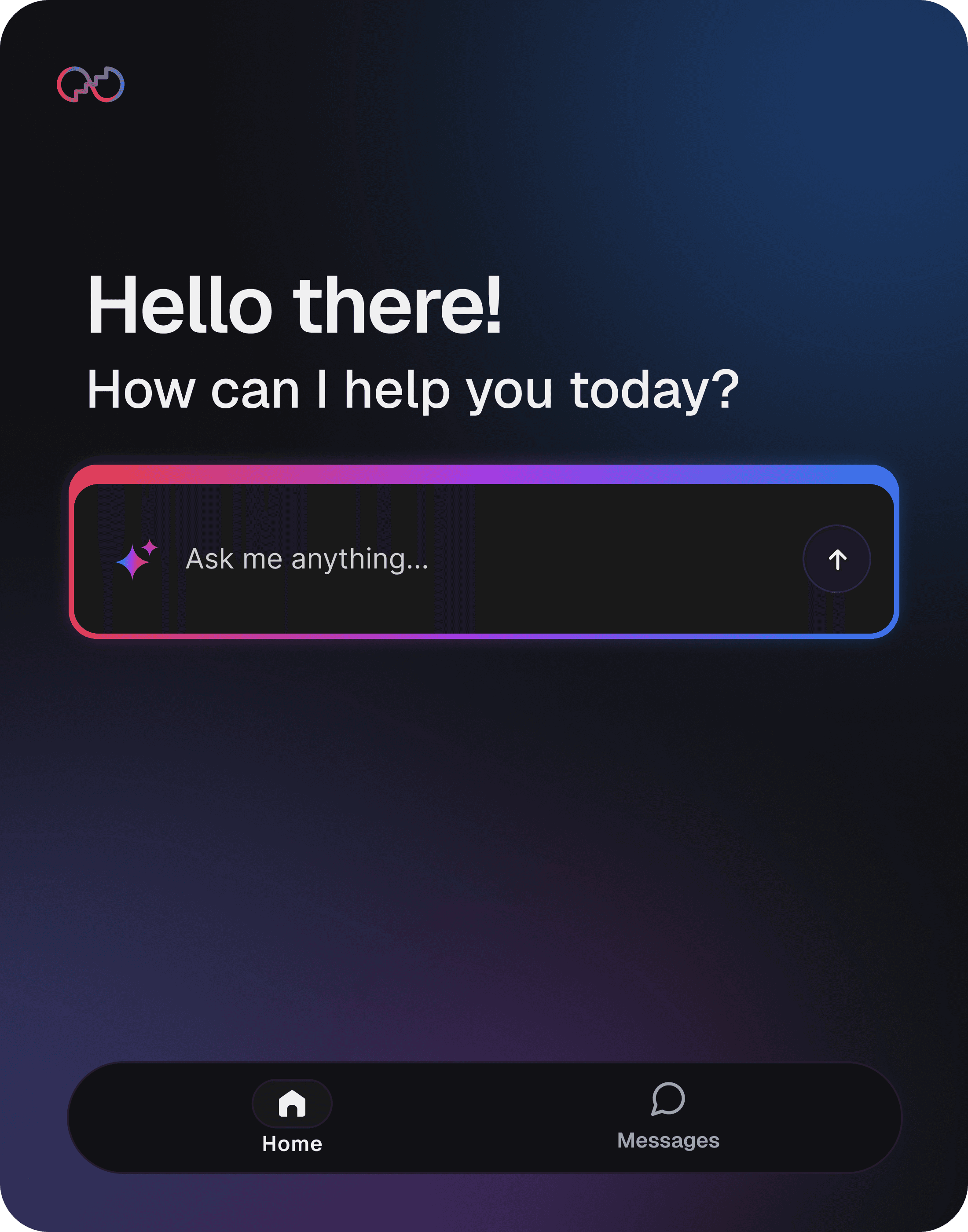
Steps AI Agentic Chatbot is the strongest option on this list for businesses that need a genuinely intelligent agent without technical overhead. It's built around the concept of agentic behavior, meaning the chatbot doesn't just respond, it takes actions, accesses live data, and drives conversations toward resolution.
The no code setup is real, not marketed. You connect your knowledge base, configure your workflows, and define escalation logic through a clean visual interface. Non-technical teams can launch, iterate, and retrain the agent without filing a support ticket to an engineering team. The platform supports multi-step task completion, which means a user can ask about an order status, request a change, and get confirmation, all within a single conversation thread.
Where Steps AI Agentic Chatbot separates itself from every other tool on this list is in its architecture. It's designed for businesses that need more than a script runner. It handles real queries with real context, connects to the systems your business actually runs on, and knows when to escalate to a human without making users feel abandoned. For teams evaluating what makes a website chatbot genuinely effective, Steps AI checks every critical box.
Best for: Mid-market and enterprise businesses that want full agentic capability without a dev team.
2. Voiceflow
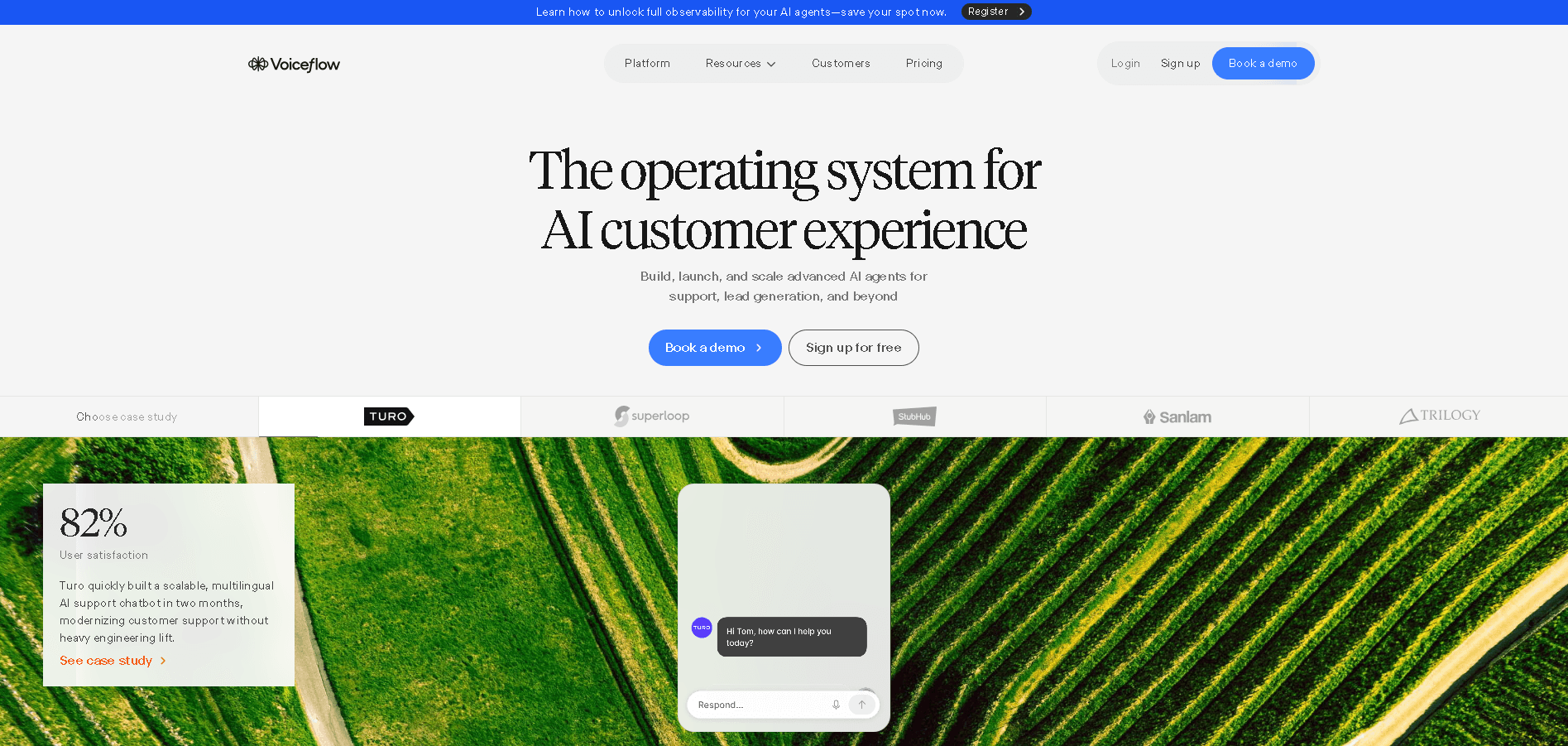
Voiceflow started as a voice app builder and has expanded into a general-purpose AI agent design platform. It offers a visual canvas where you can map conversation flows, add AI-powered responses, and build multi-channel agents. The UI is polished and the learning curve is manageable for non-technical users.
The tradeoff is that Voiceflow is primarily a design and prototyping tool. Building production-ready agents with real backend integrations typically requires developer involvement. The visual canvas works well for mapping logic, but connecting to live data sources, CRMs, or order management systems pushes you into territory that most business teams can't navigate alone.
Voiceflow is best for teams that have a designer or a technical product manager involved in the process. Purely business-side teams will hit walls. It's a capable platform, but calling it fully no code oversells the reality.
Best for: Product teams with some technical capacity who want to prototype and iterate quickly.
3. Botpress
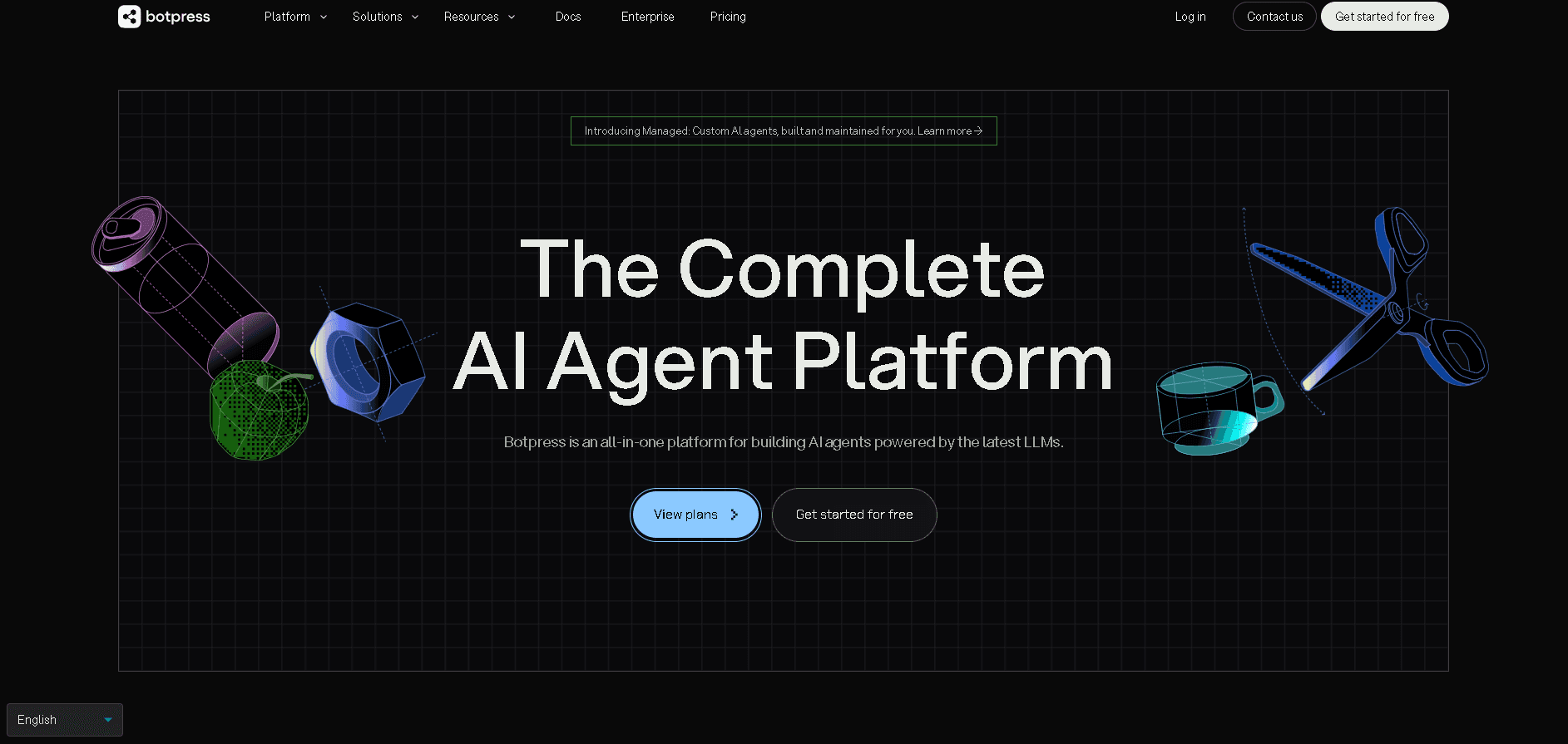
Botpress is an open-source AI agent builder that has added a cloud-hosted, no code interface in recent versions. It supports natural language understanding out of the box and allows you to build flows, configure intents, and deploy across multiple channels. For teams that want control and transparency over their agent's logic, Botpress offers more customization than most.
The challenge with Botpress is that its power comes with complexity. The no code layer handles basic use cases well, but anything beyond a straightforward Q&A flow, like dynamic data retrieval, conditional logic based on user history, or custom escalation paths, tends to require the open-source, developer-facing version. Business teams without engineering support will find the ceiling of the no code interface lower than expected.
Botpress is honest about being a developer-friendly platform that also happens to have a visual interface. If your team has technical resources, it's worth evaluating. If you don't, the gap between what the demo shows and what you can actually deploy will become frustrating quickly.
Best for: Technical teams or businesses with in-house developers who want open-source flexibility.
4. Tidio
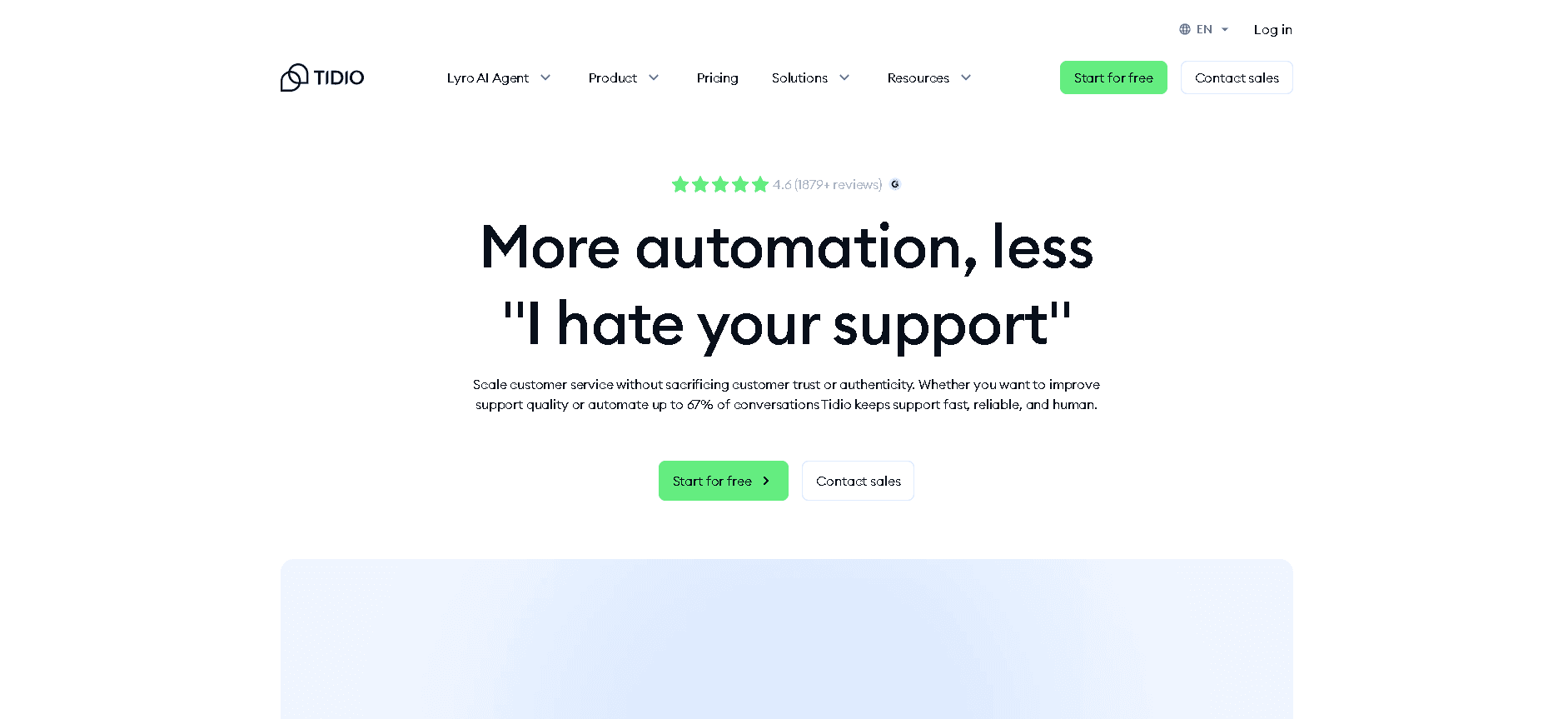
Tidio is a customer support-focused platform that combines live chat, basic automation, and AI-powered responses in a single tool. Its setup is genuinely accessible to non-technical users, and it integrates with major e-commerce platforms like Shopify and WooCommerce out of the box. For small e-commerce businesses, Tidio reduces the friction of getting something live quickly.
The limitation is that Tidio is fundamentally a support chat tool with AI features bolted on, not a purpose-built AI agent platform. Its automation flows are rule-based and linear. Its AI responses improve over time but are constrained by the platform's underlying architecture, which prioritizes simplicity over depth. You won't get multi-step task completion, dynamic workflow execution, or sophisticated escalation logic from Tidio.
If your primary need is capturing leads and answering basic support questions on a small website, Tidio delivers. If you need an agent that can execute tasks, access live data, or handle complex user journeys, you'll outgrow it quickly. Many businesses discover this problem only after going live, which is exactly the pattern described in why website chatbots fail.
Best for: Small e-commerce businesses with simple, support-heavy use cases.
5. Intercom Fin
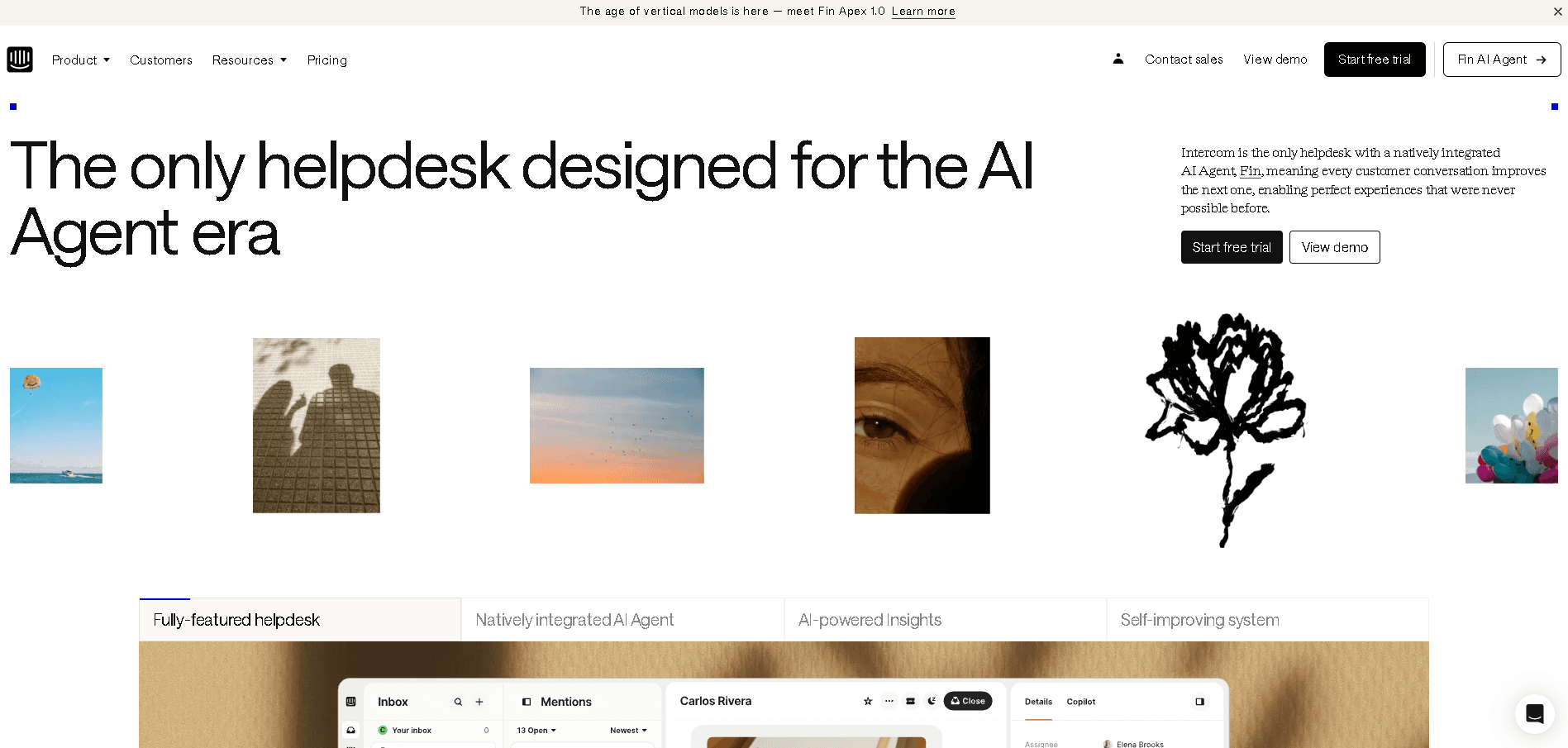
Intercom's Fin is an AI agent built on top of their existing customer messaging platform. It's powered by GPT-4 and trained on your support content, which means it can handle nuanced questions with a higher baseline of intelligence than most rule-based tools. For businesses already using Intercom, Fin is the lowest-friction path to an AI-assisted support experience.
The constraint with Fin is the ecosystem lock-in. It performs best inside Intercom's own infrastructure. If you want it connected to systems outside Intercom's native integrations, the complexity increases significantly. It's also priced for teams already paying for Intercom's broader suite, which makes it expensive if AI support resolution is your only goal.
Fin is a strong choice if you're already an Intercom customer and your primary use case is deflecting support tickets. It's less compelling as a standalone AI agent platform or for use cases beyond reactive support. Teams looking to reduce support volume should also consider whether their agent architecture actually addresses root causes, a point worth examining when thinking about how AI chatbots reduce support tickets.
Best for: Existing Intercom customers who want to layer AI onto their current support stack.
6. Stack AI
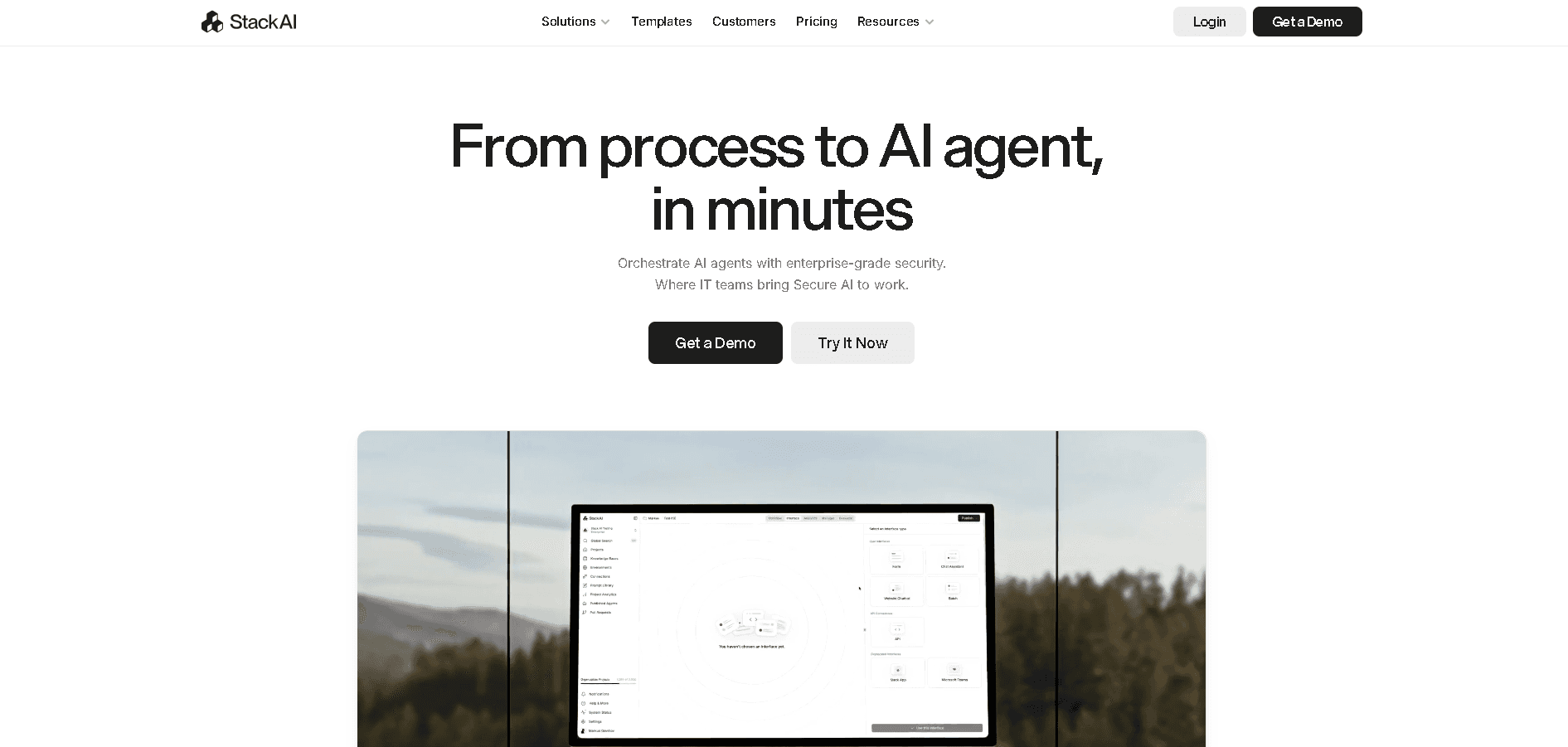
Stack AI is a newer entrant in the no code AI agent space, aimed at teams that want to build custom AI workflows without writing code. It supports integrations with common data sources, document processing, and multi-step AI pipelines. Its strength is in internal tool building and document-heavy workflows rather than customer-facing deployments.
The platform is genuinely flexible, but that flexibility creates its own challenge. Stack AI requires you to understand how AI pipelines work at a conceptual level to build something effective. It's less of a chatbot builder and more of an AI workflow editor. Non-technical business teams will need guidance to configure it effectively, particularly for anything customer-facing.
Stack AI belongs on this list as an option for operations teams building internal AI tools, not for businesses looking to deploy an intelligent customer-facing agent quickly.
Best for: Operations and internal tooling teams building document-heavy AI workflows.
What to Actually Evaluate Before Choosing a No Code AI Agent Builder
Seeing a demo is not the same as seeing a platform work under real conditions. Before committing, you need to pressure-test five things.
First, real data access. Can the agent pull live information from your CRM, order management system, or knowledge base without a developer wiring it up? If the answer involves a Zapier workaround or a webhook someone on your engineering team has to configure, it's not no code.
Second, multi-step task completion. Can the agent do more than answer a single question? A user who wants to check an order, change a delivery address, and get a confirmation email in one session needs an agent that maintains context and executes tasks sequentially. Most tools in this list can't do this without significant configuration effort.
Third, escalation design. When the agent can't resolve something, what happens? Bad escalation is one of the primary ways chatbots damage customer experience. A good no code platform lets you configure escalation paths visually, with clear logic for when and how to hand off to a human. Understanding when a chatbot hurts rather than helps customer experience is critical before you go live.
Fourth, iteration speed. How quickly can a non-technical team member update the agent after launch? If every change requires a developer or a support ticket to the vendor, your agent will become stale and ineffective within weeks.
Fifth, pricing transparency. Several platforms on this list charge based on resolution rate, message volume, or seat count in ways that make costs unpredictable at scale. Understand the pricing model before you sign.
Conclusion
The no code AI agent builder market is large, uneven, and frequently dishonest about what "no code" actually means. Most tools in this space are either too simple to handle real business complexity or too technical to be operated without developer involvement.
What good looks like: a platform where a non-technical team can connect live data, configure workflows, set escalation logic, and iterate post-launch without engineering support. The agent should complete tasks, not just answer questions. It should know when to escalate and do it gracefully. And it should improve over time as your team trains it on real conversations.
What to avoid: platforms that require backend configuration for integrations, tools that collapse outside their scripted flows, and any vendor that can't show you a working demo on a use case that matches your actual business.
Steps AI Agentic Chatbot is the platform built to meet that standard. It's the option on this list that delivers genuine agentic capability to non-technical teams, without compromising on intelligence, flexibility, or escalation design.
Start building your AI agent without writing a line of code: Steps AI Agentic Chatbot
Frequently Asked Questions
What is a no code AI agent builder?
A no code AI agent builder is a platform that lets you create, configure, and deploy an AI-powered agent through a visual interface, without writing any code. The key distinction from traditional chatbot builders is that a true no code AI agent can access live data, complete multi-step tasks, and handle complex user journeys, all configurable by non-technical team members.
How is an AI agent different from a regular chatbot?
A traditional chatbot follows scripted rules and responds to predefined keywords or decision trees. An AI agent reasons through context, accesses external data sources, and executes multi-step tasks toward a goal. The gap in business outcomes between the two is significant. A chatbot answers; an agent resolves.
Can a no code AI agent integrate with my existing systems like a CRM or helpdesk?
The best platforms, including Steps AI Agentic Chatbot, support native integrations with common business systems without requiring developer involvement. However, many tools marketed as no code require backend configuration for integrations. Always verify this before committing to a platform by testing a real integration during your trial period.
How do I know if a no code AI agent builder is actually no code?
The real test is whether a non-technical team member can complete the full setup, including data connections, workflow logic, and escalation paths, without filing a single request to an engineer. If the vendor's onboarding process involves "implementation support" from a technical team, you're looking at low code, not no code.
Is Steps AI Agentic Chatbot suitable for small businesses?
Steps AI Agentic Chatbot is designed to scale with the business. Small businesses benefit from the fast, no code setup and the intelligence of the agent without needing technical resources. Mid-market and enterprise teams benefit from the depth of workflow configuration and live data access. The platform is not limited to a single business size or vertical.