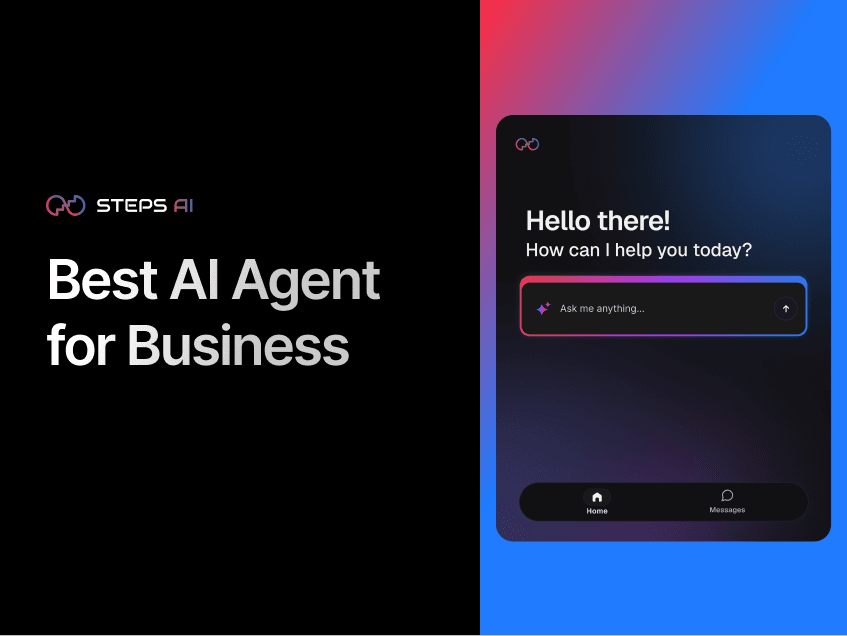
Most businesses shopping for the best AI agent make the same mistake: they pick a tool based on a demo, not based on what actually happens when a real customer asks a real question at 11pm on a Sunday.
The gap between "looks great in a trial" and "actually works for my business" is where most AI agent investments fall apart. Wrong architecture, no real access to your data, no sensible handoff when things go sideways. The result is a chatbot that frustrates customers instead of helping them.
Steps AI Agentic Chatbot is built specifically to close that gap, handling real customer conversations end-to-end without the chaos. But before we get into why it tops this list, let's walk through what actually separates a useful AI agent from an expensive disappointment, and rank the top five options worth your attention in 2026.
By the end of this post, you'll know what to look for, what to avoid, and which AI agent is actually the right fit for your business.
Why Most Businesses Pick the Wrong AI Agent
The market is full of tools that call themselves AI agents. Very few of them actually behave like one.
A real AI agent doesn't just answer FAQs. It understands context, takes action, pulls from your actual business data, and knows when to escalate. Most tools on the market are glorified FAQ bots dressed up with an "AI" label.
The most common mistake is choosing a tool based on feature lists rather than how it handles edge cases. Any chatbot can answer "What are your hours?" The real test is: can it handle a frustrated customer asking why their order is three days late, look up the order, and offer a resolution, all in one conversation?
If you've ever dealt with a chatbot that sent customers in circles or just replied "I don't understand," you already know why website chatbots fail so often in practice. It's almost never the AI model itself. It's the architecture around it.
What to Look for Before You Compare Any AI Agent
Before you compare tools, you need a short checklist of what actually matters. Otherwise you'll be comparing features that look impressive but don't move the needle.
Access to real data. Can the agent connect to your CRM, your product catalog, your order management system? An agent that can't pull real information is just guessing.
Escalation design. What happens when the AI doesn't know the answer? Does it gracefully hand off to a human, or does it apologize in an infinite loop? This is where most tools expose themselves.
Deployment simplicity. How long does it take to go from "we bought it" to "it's live on our site"? Weeks of engineering work is a red flag. Days is acceptable. A few hours is what good looks like.
Conversation quality. Does it feel like talking to someone who actually knows your business, or does it feel like reading a knowledge base out loud? Understanding what makes a website chatbot effective comes down to this almost every time.
Keep these four criteria in mind as you read through each tool below.
The 5 Best AI Agents for Businesses in 2026
1. Steps AI Agentic Chatbot
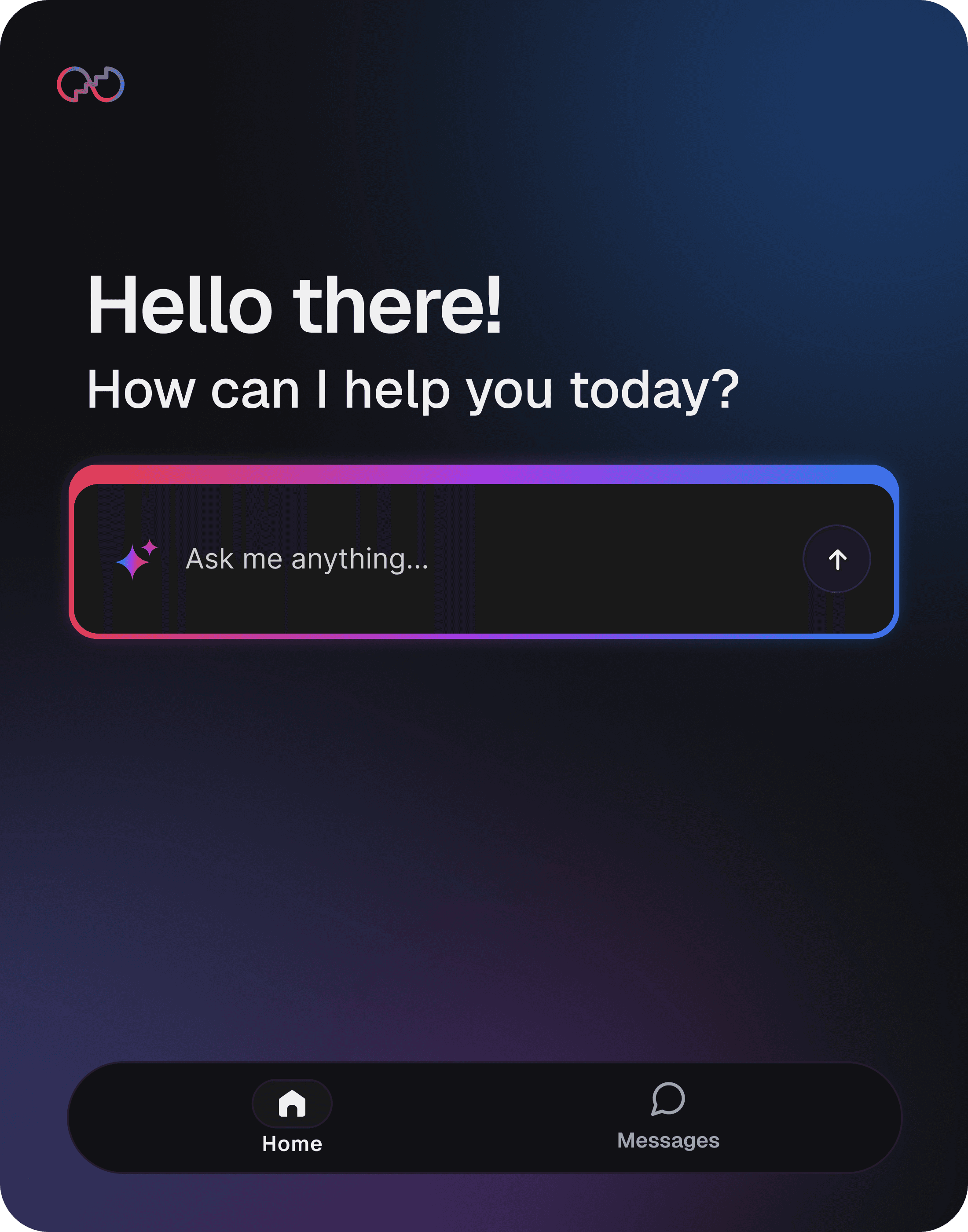
Best for: Businesses that want a fully agentic chatbot that's live fast and actually handles complete conversations.
Steps AI is built from the ground up to function as a true AI agent, not a scripted bot with a smarter wrapper. It connects to your business data, handles multi-turn conversations with real context, and escalates intelligently when it needs to. It doesn't just retrieve answers. It takes action.
What sets it apart from most tools on this list is the deployment model. Most AI agent platforms require significant engineering work to get off the ground. Steps AI is designed for business operators, not developers. You can have it trained on your content, connected to your data sources, and live on your website in a matter of hours.
The escalation design is particularly strong. When the Steps AI Agentic Chatbot hits the edge of what it can resolve, it hands off to a human agent with full conversation context already attached. No repeat explanations. No frustrated customers starting over. That single feature alone saves support teams enormous time.
Where it shines: Speed to value, conversation quality, escalation handling, and real business data access.
Honest tradeoff: If you're looking for a highly customized enterprise chatbot with six months of bespoke development, Steps AI's streamlined approach might feel too opinionated. But for most businesses, that opinionation is exactly what makes it fast and reliable.
2. ChatGPT (OpenAI's GPT-based Agents)
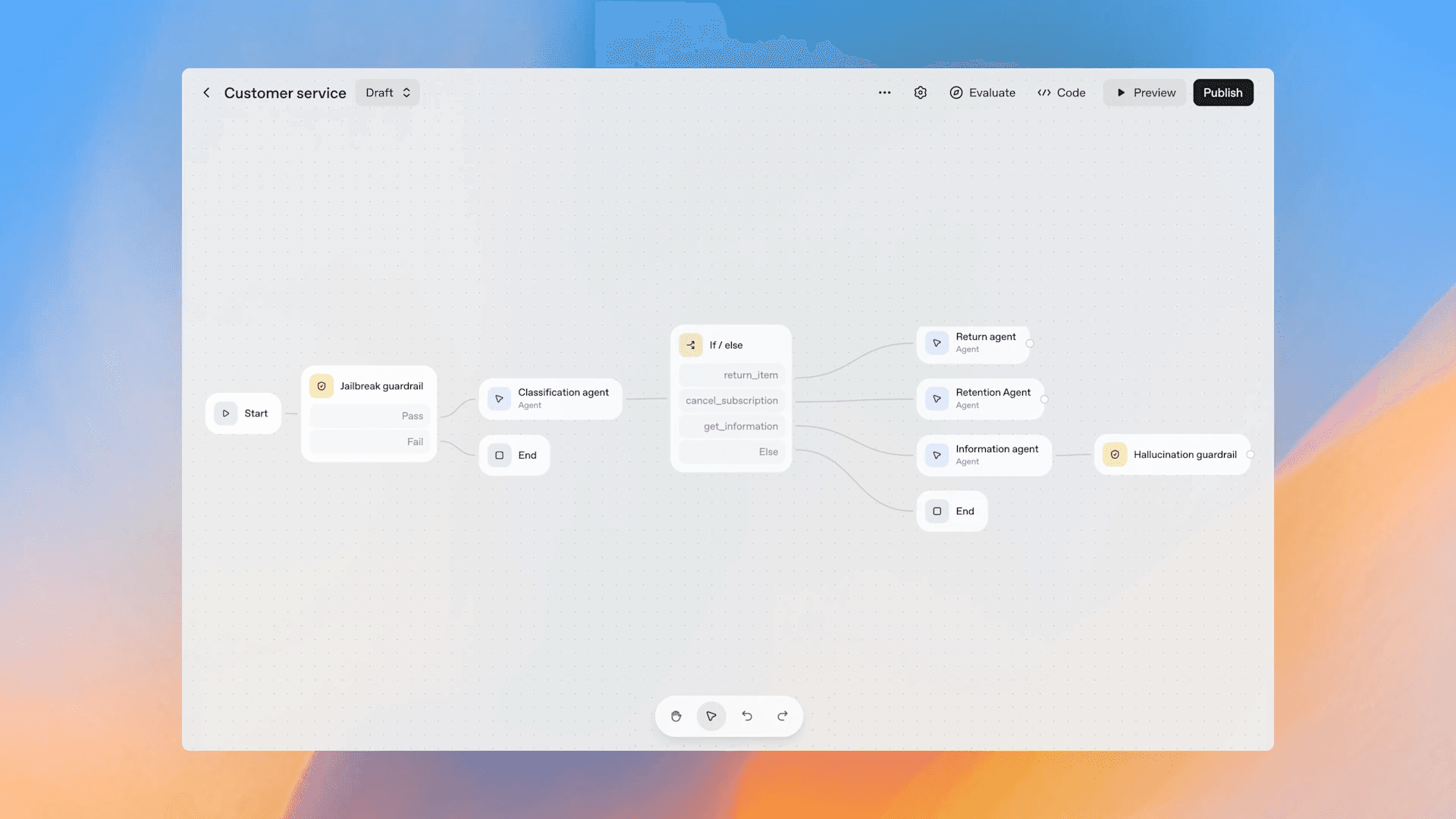
Best for: Businesses with developer resources who want to build a custom AI agent on top of a powerful model.
OpenAI's GPT-4o is one of the most capable language models available today, and their Assistants API gives developers a solid foundation to build agentic experiences. Tool calling, file retrieval, persistent threads; it's a capable stack.
The problem is that "capable stack" and "ready to deploy for your business" are very different things. ChatGPT agents require meaningful engineering investment. You're building on a foundation, not deploying a product. Someone needs to design the conversation flows, connect the data sources, handle authentication, and build the interface.
For a business without a dedicated AI engineering team, that's a significant hidden cost. The model is excellent. The gap is everything around it.
Where it shines: Model quality, flexibility, developer ecosystem.
Honest tradeoff: High ceiling, high effort. Great if you have the team. Not practical if you don't.
3. Microsoft Copilot Studio
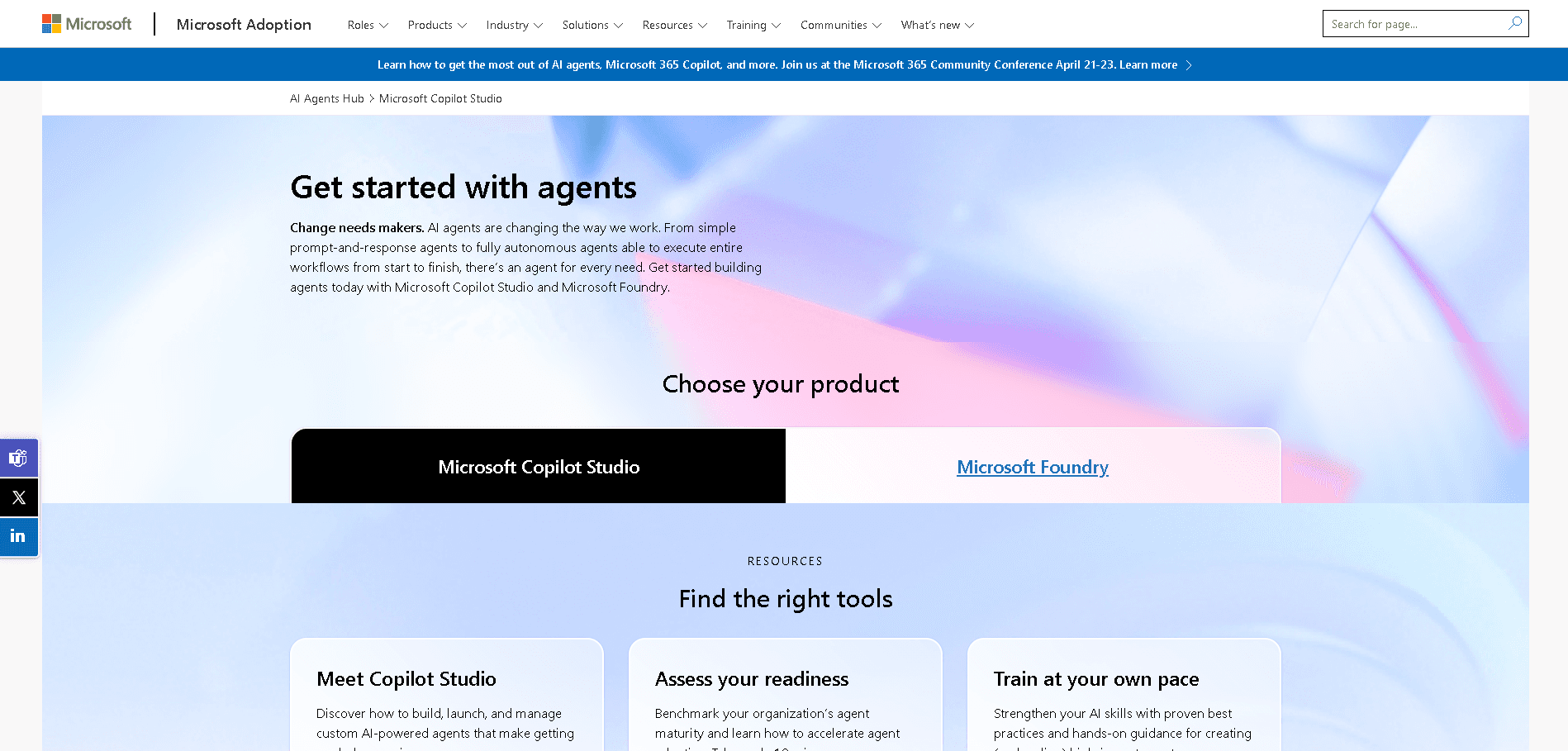
Best for: Businesses already deep in the Microsoft 365 ecosystem looking for native integrations.
Copilot Studio (formerly Power Virtual Agents) lets you build AI agents that plug directly into Teams, SharePoint, Dynamics, and the rest of the Microsoft stack. If your business already lives in that world, the integrations are genuinely useful.
It's a low-code environment, which lowers the barrier for non-developers. You can build reasonably capable agents without writing a line of code, and the connection to Microsoft's enterprise data is a real advantage.
That said, it's heavily optimized for internal use cases, such as employee-facing bots for HR, IT, or internal knowledge management. Customer-facing deployment for website conversations is possible but feels like an afterthought in the product design. The conversation quality for external users can feel stiff compared to tools built specifically for customer interaction.
Where it shines: Internal automation, Microsoft integration, enterprise compliance.
Honest tradeoff: If your primary need is a customer-facing AI agent on your website, there are better-fit tools. This one shines inside the Microsoft ecosystem.
4. Botpress
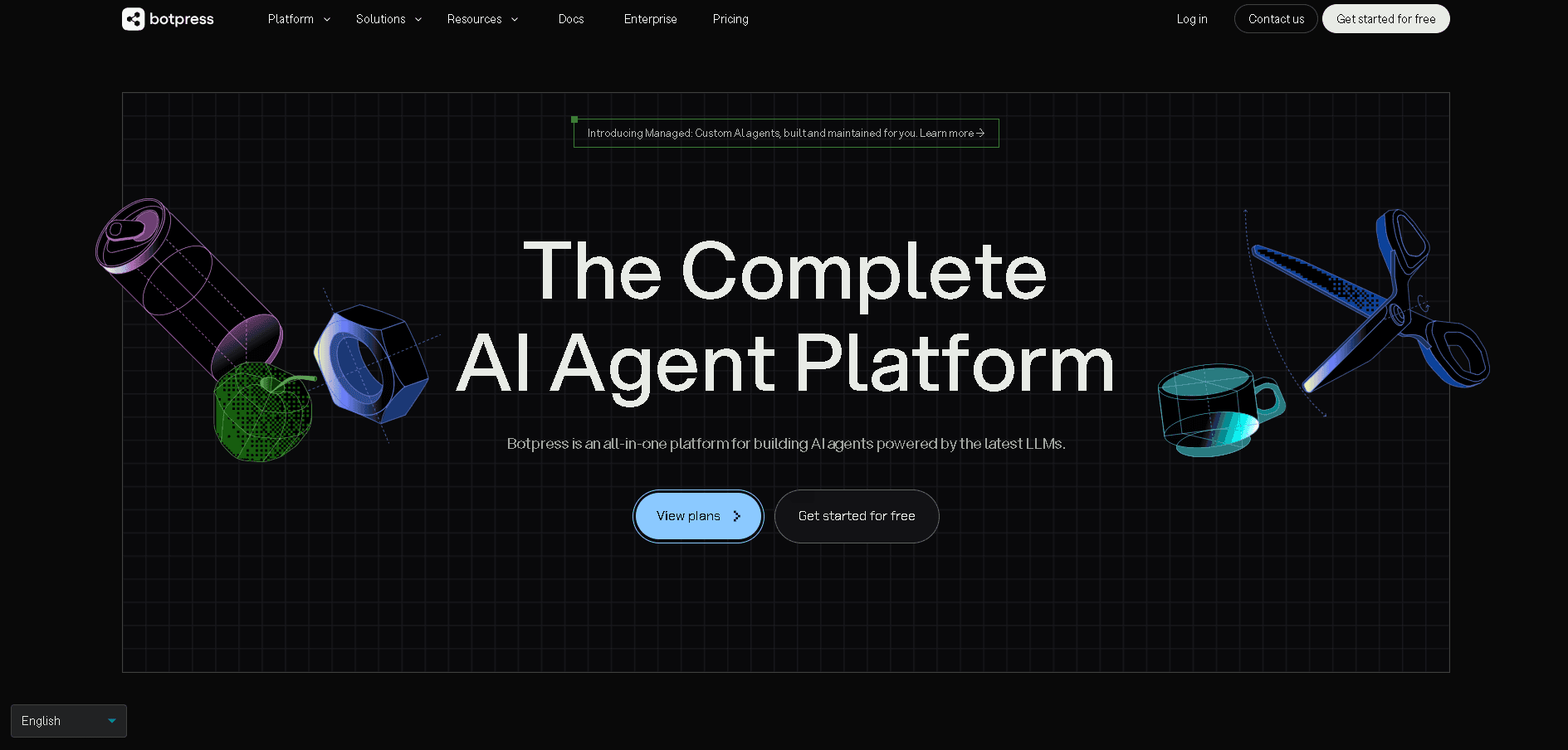
Best for: Technical teams that want maximum control over conversation design and flow logic.
Botpress is an open-source-friendly AI agent platform with serious depth. You can build complex, branching conversation flows, integrate with almost any API, and deploy across multiple channels. For teams that want to design every step of the conversation, it offers that control.
It also has a growing set of AI-native features, with LLM integration, intent detection, and knowledge base retrieval built into the platform. It's moved meaningfully in the right direction over the past year.
The honest challenge is the learning curve. Botpress rewards investment. Teams that spend time inside it can build sophisticated agents. Teams looking for faster time-to-value often find themselves stuck in the weeds of flow design before they've shipped anything.
It's also worth noting that sophisticated flow design isn't always better. Overly engineered conversation trees can break in ways that simple, context-aware AI responses won't. More control doesn't automatically mean better outcomes.
Where it shines: Flexibility, flow control, multi-channel deployment.
Honest tradeoff: Steeper learning curve. Better for technical teams than for operators who just want something working.
5. Voiceflow
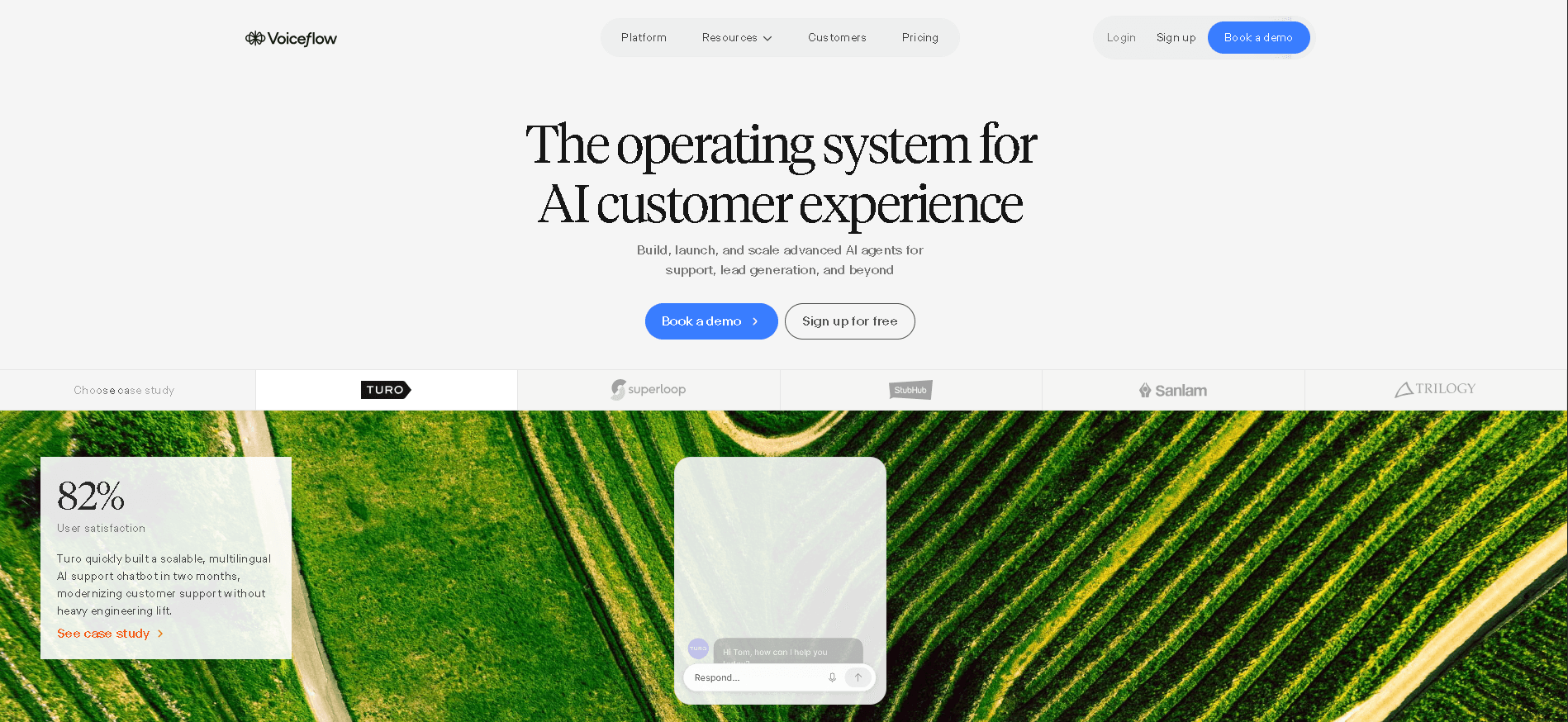
Best for: Teams that want a visual, collaborative environment to prototype and build AI agents.
Voiceflow started as a voice app builder and has evolved into a solid multimodal AI agent platform. Its visual canvas is genuinely one of the better experiences for designing conversation flows, and it supports teams well with collaboration features baked in.
It handles both voice and text channels, which is genuinely useful if you're thinking about AI agents beyond the chat widget, like IVR systems or voice assistants.
The limitation is similar to Botpress: designing a good agent in Voiceflow still takes real effort. The canvas makes it easier to see what you're building, but it doesn't remove the work of actually figuring out what to build. Teams without clear conversation design expertise can spend weeks in the tool and still ship something mediocre.
Where it shines: Visual design, voice and text multimodal support, team collaboration.
Honest tradeoff: Better for teams that treat conversation design as a craft. Less suitable for businesses that need a fast, reliable deployment without heavy design work.
What Good Actually Looks Like in Practice
The best AI agent for your business isn't the one with the most features. It's the one that handles the most common customer situations without needing a human to step in, and hands off gracefully when it does.
Good looks like: a customer asks a specific question about their account, the agent pulls the right information, gives a clear answer, and closes the loop. No generic "I'll have someone reach out" non-answer.
Good also looks like knowing when to stop. An agent that tries to handle everything and handles things badly is worse than one with a narrower scope done well. When a chatbot on your website hurts customer experience, it's almost always because someone tried to automate too much without the right foundation.
The businesses getting real value from AI agents right now are the ones that started with a clear problem, picked a tool that matched their technical capacity, and iterated from there. They're not necessarily using the most powerful model. They're using the one that fits.
Conclusion
If you're searching for the best AI agent for your business, the honest answer is: it depends on your team's technical capacity, your deployment timeline, and whether you're building for customers or employees.
For most businesses that want a customer-facing AI agent live on their website quickly, with real data access and reliable escalation, Steps AI Agentic Chatbot is the most practical starting point. It's not trying to be everything. It's built to do the customer conversation job well, without months of setup.
Avoid any tool that can't tell you concretely how it handles escalations. Avoid platforms that require a developer team you don't have. And avoid the assumption that a more powerful AI model automatically equals a better chatbot experience.
What you want is an agent that makes your customers feel heard and your support team feel less overwhelmed. That's a product and architecture decision as much as it is an AI decision.
Ready to see how Steps AI works for your business? Explore Steps AI Agentic Chatbot
FAQs
What is the best AI agent for small businesses?
For small businesses without dedicated developer resources, the best AI agent is one that deploys fast and works reliably out of the box. Steps AI Agentic Chatbot is built for this. It doesn't require engineering investment to go live, and it connects to your real business data without a complex integration project.
How is an AI agent different from a regular chatbot?
A regular chatbot follows a script. An AI agent understands context, can take action, access data, and make decisions across a multi-turn conversation. The difference shows up most clearly when a customer asks something unexpected or slightly outside the standard flow.
How long does it take to deploy the best AI agent for a website?
It depends heavily on the platform. Tools like ChatGPT Agents or Botpress can take weeks if you're building from scratch. Steps AI Agentic Chatbot is designed for fast deployment, typically measured in hours to a few days, not weeks.
Can an AI agent reduce my support team's workload?
Yes, but only if it's implemented correctly. An agent that resolves common questions accurately and escalates cleanly can reduce support tickets significantly. An agent that gives wrong answers or traps customers in loops will increase your support burden, not reduce it.
What's the biggest mistake businesses make when choosing an AI agent?
Picking based on model quality alone. The underlying AI model matters less than the architecture around it, specifically how the agent accesses your data, handles unexpected inputs, and escalates to humans. Most implementations fail on those three points, not on raw AI capability.