Most sales and support teams are drowning in repetitive work. Leads go cold because follow-ups are delayed. Support queues pile up because agents are stuck answering the same five questions for the hundredth time. The promise of AI was supposed to fix this, but most teams picked tools that were either too rigid, too generic, or simply not built for real business operations.
The problem is not a lack of AI agent tools. The problem is knowing which ones actually move the needle for sales and support specifically, and which ones just add another layer of complexity to manage.
Steps AI Agentic Chatbot was built precisely for this gap, handling customer conversations, qualifying leads, and resolving support queries autonomously so your human team focuses on work that actually requires them. Before we get to the full list, understand that the best AI agent tools share one trait: they take action, not just provide answers.
Here is a practical breakdown of the best AI agent tools for sales and support teams heading into 2026.
Why Most AI Agent Tools Fall Short for Sales and Support
Before listing tools, it is worth understanding why so many AI implementations fail in these two functions specifically.
Most AI tools are designed to retrieve information. They answer questions from a knowledge base, generate text, or summarize data. That is not the same as acting on behalf of a business. A sales team needs an AI agent that qualifies a lead, books a meeting, and updates the CRM without a human in the loop. A support team needs an AI agent that resolves a ticket, checks order status, and escalates to the right person when it cannot handle something.
The gap between "AI that answers" and "AI that acts" is where most tools fall apart. Businesses install a chatbot, it deflects a few FAQs, and the team concludes AI does not work for them. The real issue is why website chatbots fail: wrong architecture, no real-time data access, and no clear escalation path.
The tools below were selected because they are built around action, not just generation. Each one has a specific role in a sales or support workflow.
The Best AI Agent Tools for Sales and Support Teams in 2026
1. Steps AI Agentic Chatbot (Autonomous Customer Support and Lead Qualification)
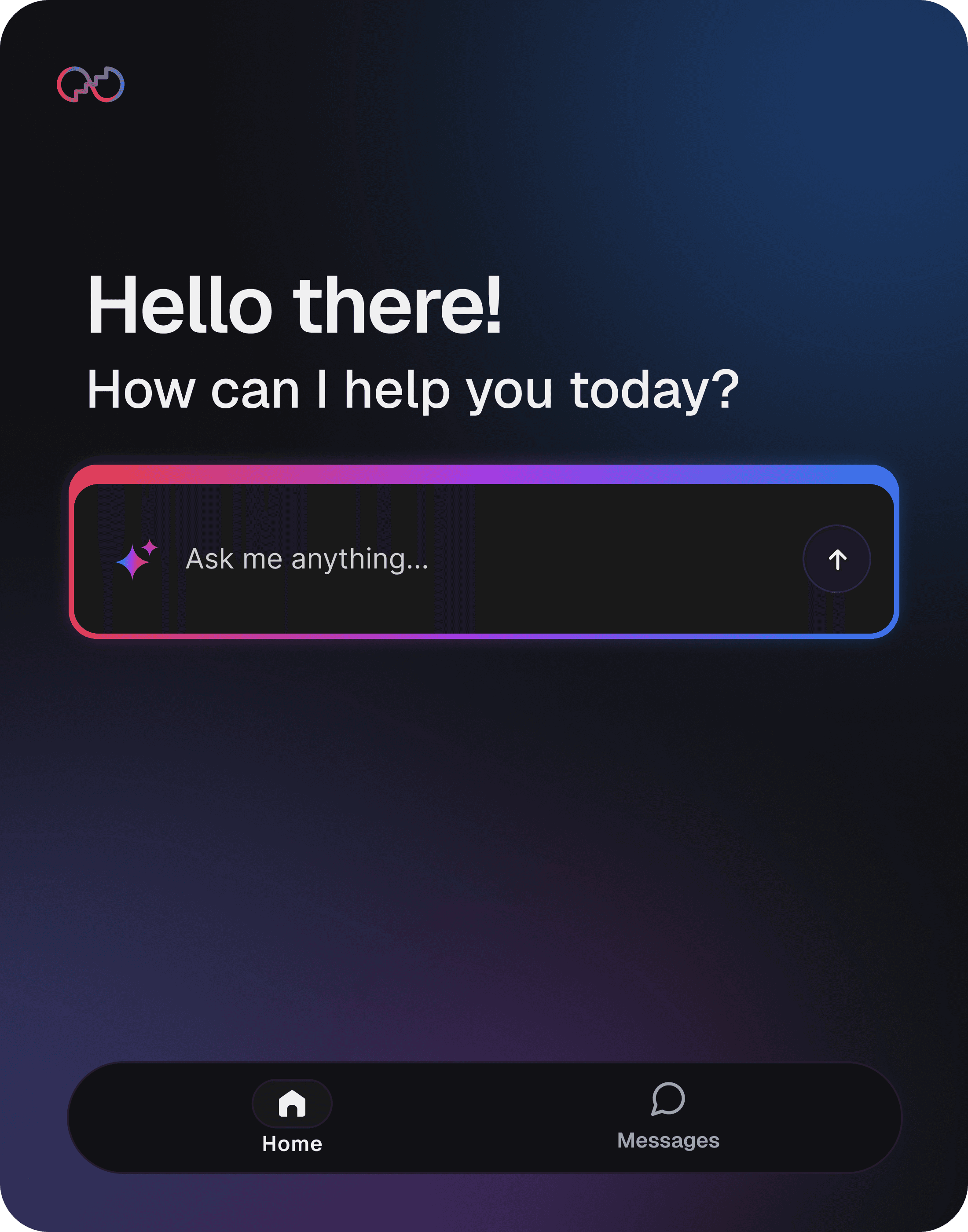
Best for: Businesses that want one AI agent handling both sales conversations and support resolution without separate systems.
Steps AI Agentic Chatbot is the strongest end-to-end option for teams that need AI handling live conversations on their website. It does not just respond, it qualifies visitors, routes inquiries, answers complex product questions, and escalates unresolved issues to human agents with full context passed through.
What separates it from basic chatbot tools is the agentic layer. The chatbot can be trained on your specific business data, product catalog, and policies. It understands intent, not just keywords. A visitor asking "do you offer discounts for annual plans" gets a real answer, not a generic redirect to a pricing page. A support visitor asking about a delayed order gets their status pulled, not a "please email us" dead end.
For teams worried about chatbots creating friction instead of solving it, understanding what makes a website chatbot effective is the right starting point. Steps AI is designed around those principles: contextual understanding, clean escalation, and business-specific training.
Steps AI Agentic Chatbot is the right choice if you want one platform that covers the full conversation layer for both sales and support.
2. Clay (AI-Powered Lead Research and Enrichment)
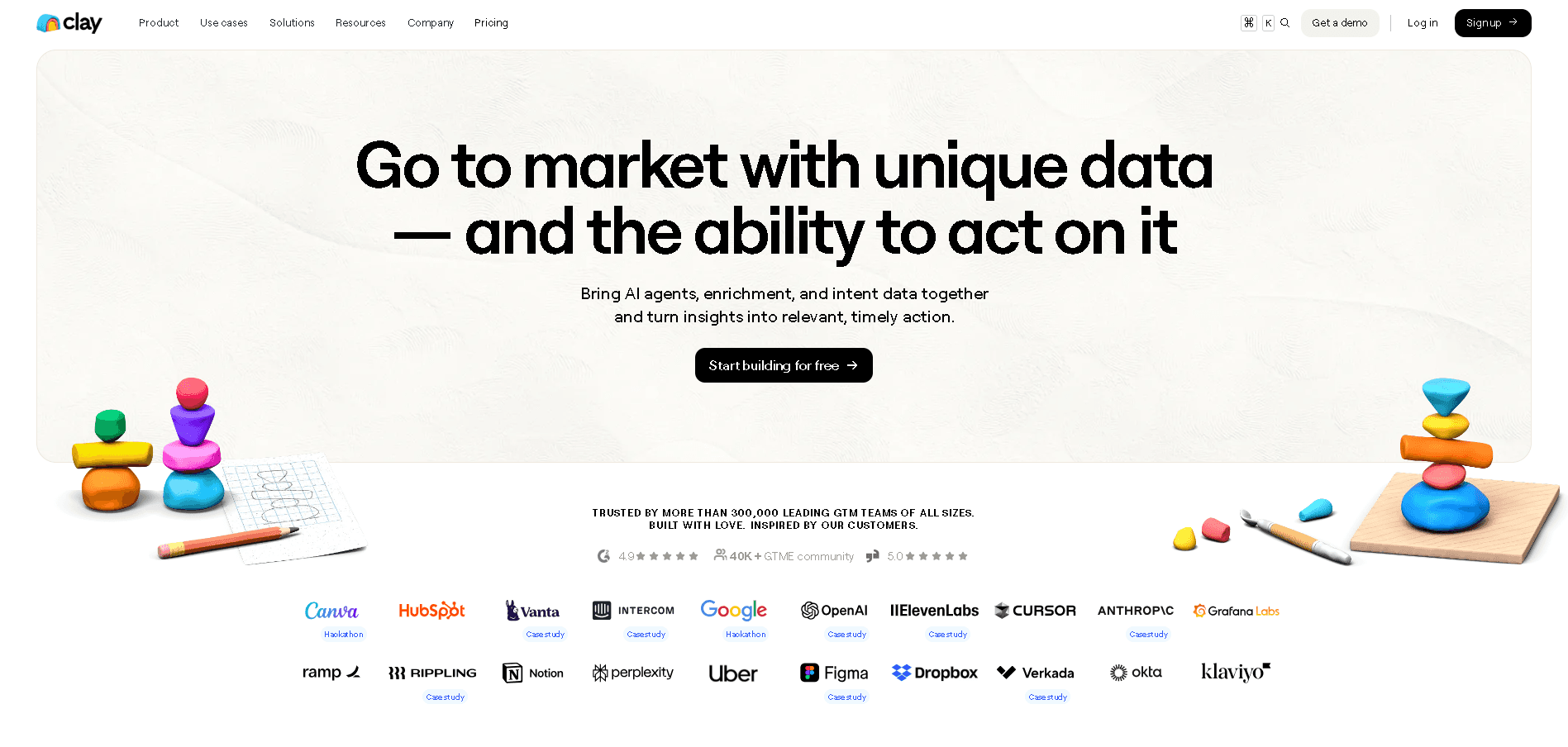
Best for: Outbound sales teams that need enriched, actionable lead data without manual research hours.
Clay sits at the top of the outbound sales stack because it automates the intelligence-gathering that used to take SDRs hours per day. It pulls data from dozens of sources, runs AI-powered research agents on each contact, and builds enriched lead profiles automatically. The output is a prospecting list where each row already contains the context an SDR needs to write a relevant outreach message.
The key value is specificity. Clay does not just pull job titles. It finds recent LinkedIn activity, company funding events, tech stack signals, and intent data. Sales teams using Clay report significantly shorter research cycles and higher reply rates because outreach is grounded in actual context, not generic assumptions.
Clay is not a chatbot or a conversation tool. It is a data and workflow agent for pre-conversation sales prep. Pair it with a strong conversation layer like Steps AI Chatbot to close the full loop from prospecting to engaged lead.
3. Outreach AI (Sales Engagement and Follow-Up Automation)
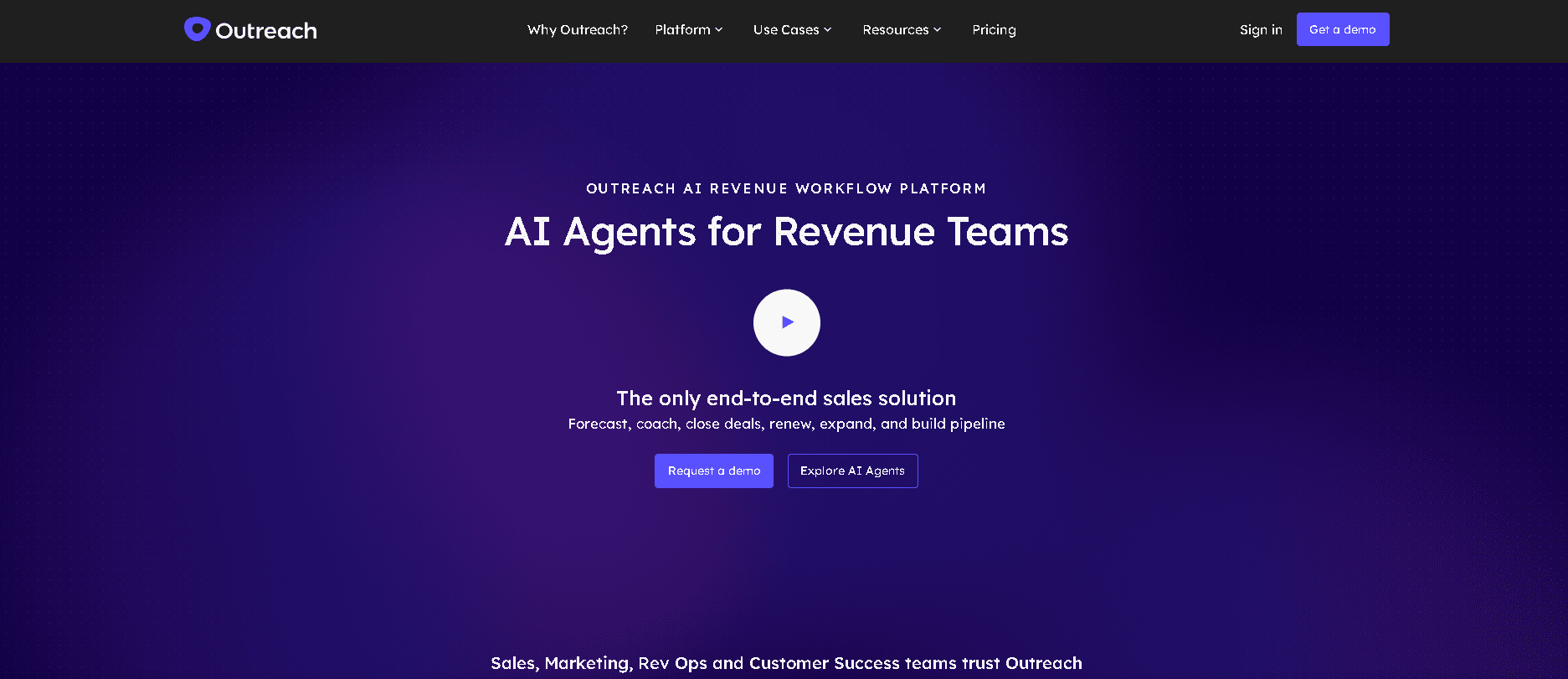
Best for: Sales teams managing high-volume outbound sequences that need AI to optimize timing, messaging, and follow-up.
Outreach has evolved well beyond a simple email sequencer. Its AI layer now handles things like optimal send-time prediction, email content suggestions based on deal stage, and automatic sequence adjustments when a prospect shows engagement signals. It removes the guesswork from follow-up cadence, which is where most deals quietly die.
The AI agent functionality within Outreach focuses on deal risk scoring and pipeline health. It surfaces deals that are going cold, flags accounts with no recent activity, and recommends next actions. For a sales manager, this means real-time visibility into where human attention is actually needed rather than reviewing every deal manually.
Outreach AI works best for teams with an established outbound motion that want AI to sharpen execution, not replace strategy. It does not replace the need for a strong top-of-funnel tool or a live conversation layer.
4. Gong (Conversation Intelligence for Sales Coaching)
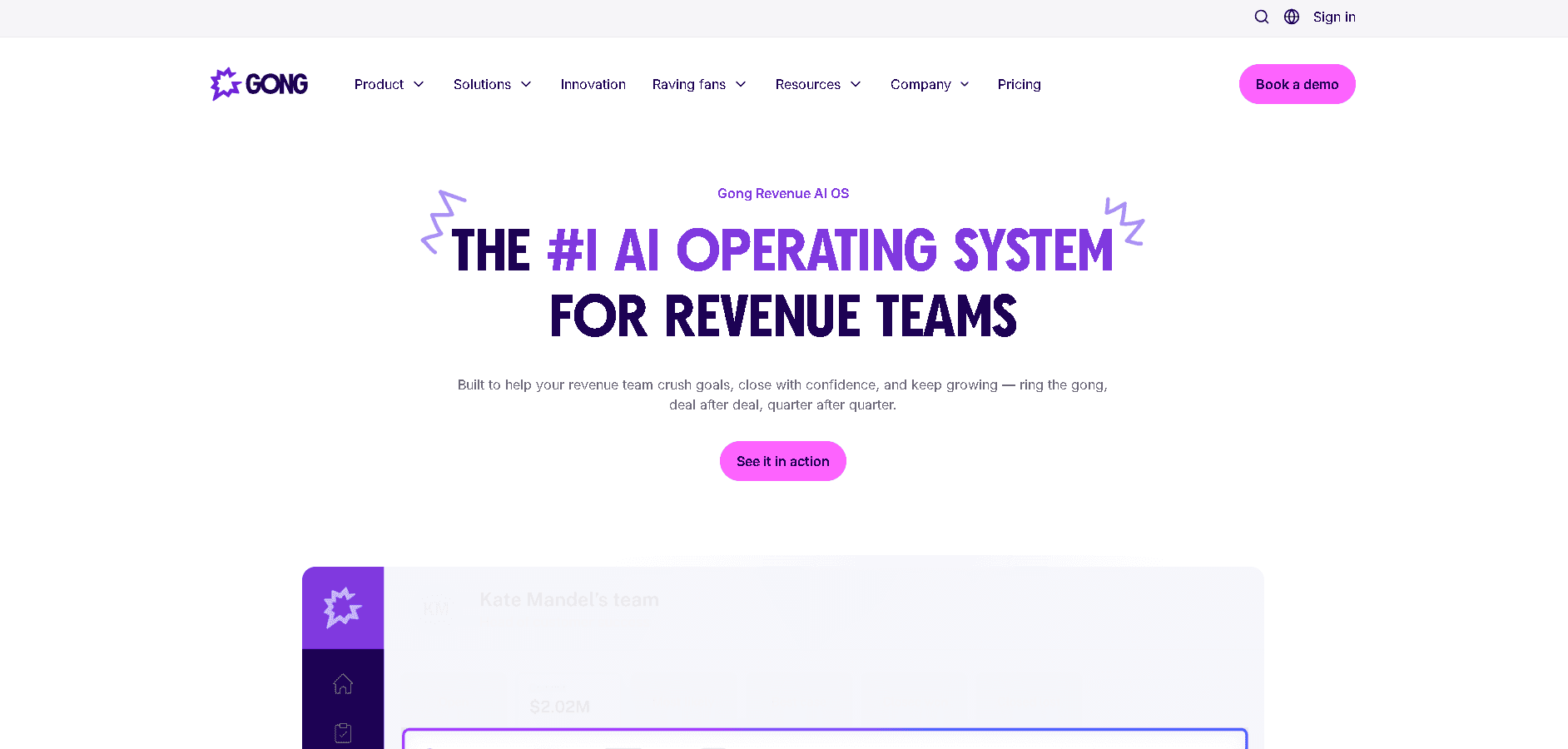
Best for: Sales teams that want AI to analyze every customer call and surface patterns that win or lose deals.
Gong records, transcribes, and analyzes sales calls using AI. It tracks talk ratios, identifies moments where deals stall, and scores rep performance against successful deal patterns. Sales managers stop guessing why certain reps close more and start working with actual data.
Gong's strongest feature is its deal intelligence. It can predict which opportunities are at risk based on conversation signals, not just CRM data entry. If a prospect used certain language, asked specific objection questions, or went quiet after a particular call, Gong flags it. That is actionable intelligence at a scale no human manager can replicate manually.
For support teams, Gong has limited application. It is a sales-specific tool. But for any sales org doing volume calls, it is one of the highest-ROI AI agent tools available because it compounds over time, every rep gets better faster.
5. Intercom Fin AI (AI-Powered Support Resolution)
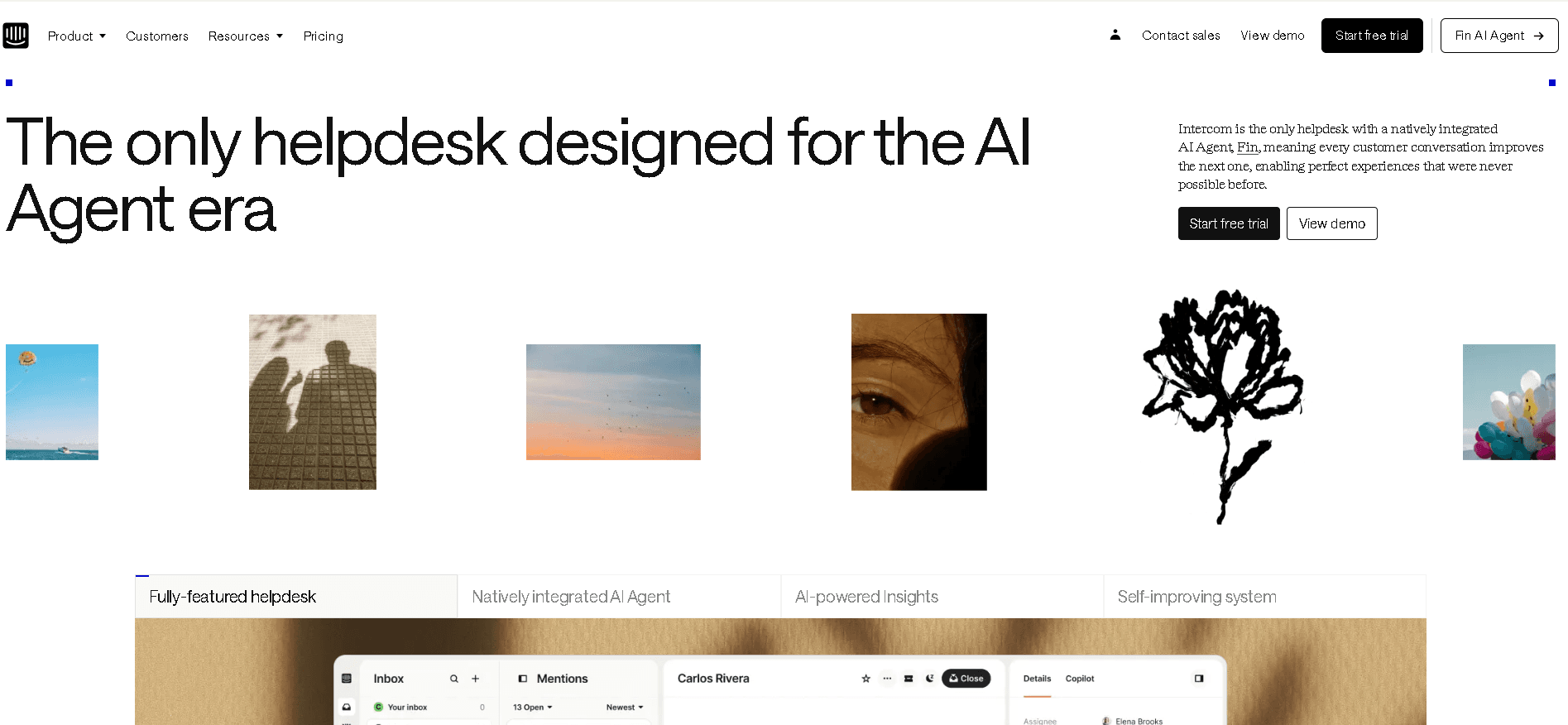
Best for: Product-led companies that need AI resolving support tickets before they reach a human agent.
Intercom Fin is an AI support agent built on top of GPT-level models, trained to resolve customer queries using your help center content and documentation. It handles Tier 1 support questions autonomously, passes complex issues to human agents, and keeps full context in the thread so nothing is repeated.
The tool works well when your support content is well-structured and up to date. Fin does not improvise. If the answer is not in your documentation, it will say so and escalate. That is actually a feature, not a limitation, because it prevents hallucinated responses reaching customers.
The honest tradeoff is that Fin is primarily a resolution layer, not a sales or lead generation tool. If you need a single system handling both pre-sale conversations and post-sale support, Steps AI Agentic Chatbot is the better fit. Fin is best used when your support content infrastructure is already mature.
6. Apollo AI (Sales Intelligence and Outreach Automation)
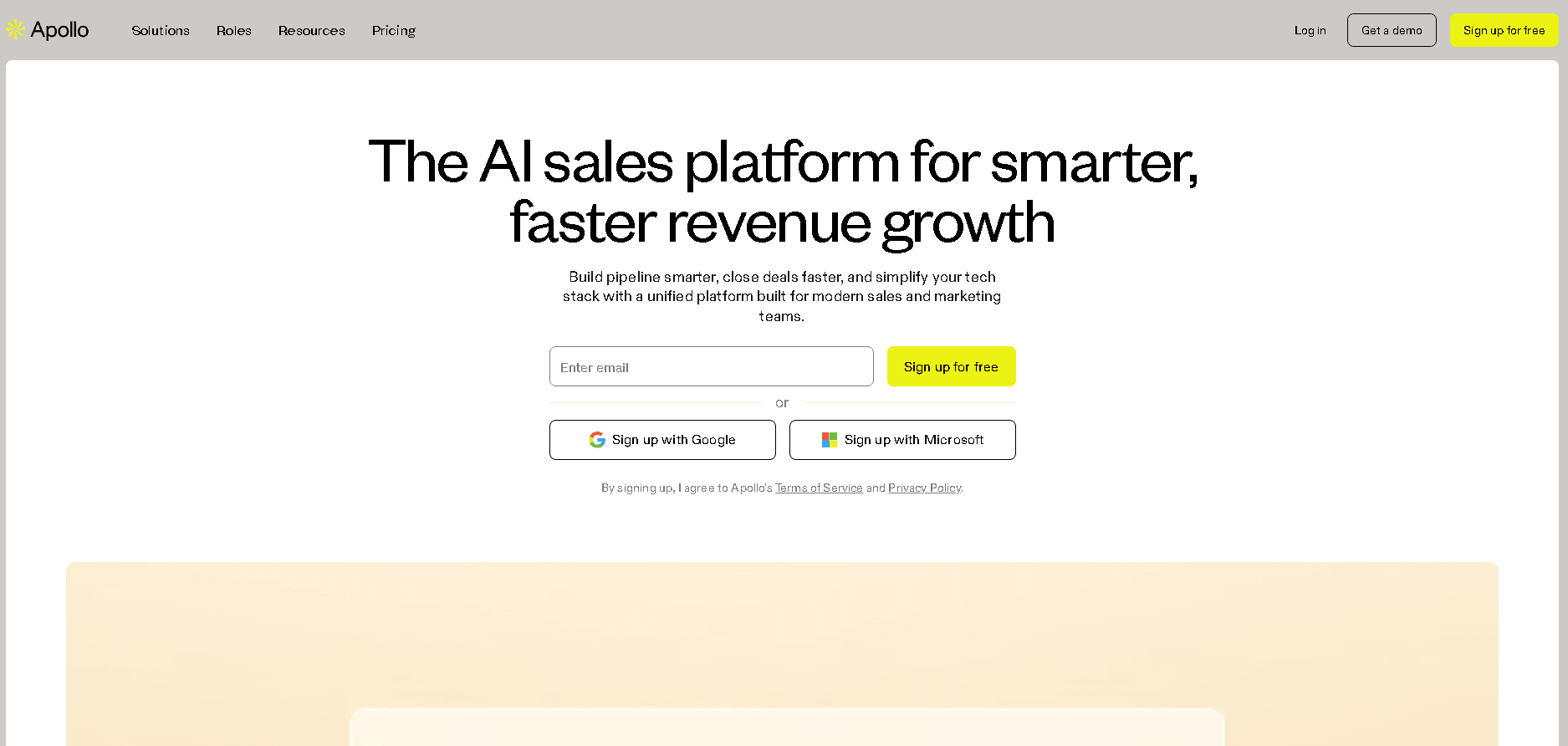
Best for: Small to mid-size sales teams that need prospecting, enrichment, and outreach sequencing in one platform.
Apollo combines a massive B2B contact database with AI-powered sequencing and intent signals. For teams that cannot afford to stack five separate tools, Apollo provides a usable version of most outbound sales capabilities in one place. Its AI layer helps with email personalization at scale, contact scoring, and outreach timing.
Apollo AI is not the deepest tool in any single category, but its coverage across the full outbound workflow makes it practical for leaner teams. The intent data signals are particularly useful, highlighting accounts that are actively researching solutions in your category right now.
The limitation is depth. Teams doing serious enterprise outbound will outgrow Apollo and need dedicated enrichment tools like Clay on top of it. But as a starting point for AI-assisted sales, it delivers strong value relative to its cost.
How to Evaluate AI Agent Tools Before You Commit
Picking the wrong tool does not just waste budget. It wastes the months it takes to realize the tool is not working. Here is what to evaluate before committing.
First, be clear on whether you need an AI agent that acts or one that assists. Clay and Gong assist humans by surfacing better information. Steps AI Agentic Chatbot and Intercom Fin act autonomously in live customer conversations. These are different architectures with different failure modes.
Second, check real-time data access. An AI agent that cannot connect to your CRM, order management system, or product database will give generic answers in situations that require specific ones. This is one of the core reasons chatbots hurt customer experience instead of helping: they respond without context.
Third, evaluate escalation design. What happens when the AI agent cannot handle something? If the answer is "it just says it cannot help," that is a broken experience. Good escalation means the handoff to a human includes everything the AI already learned in that conversation.
Teams that think through these three questions before selecting tools avoid the majority of costly AI implementation mistakes. The tools in this list were chosen because they each have clear answers to all three.
Conclusion
The best AI agent tools in 2026 are not the ones with the most features. They are the ones that fit a specific role in your workflow and execute it reliably. For outbound sales intelligence, Clay and Apollo stand out. For call coaching and deal risk, Gong is in a category of its own. For support resolution, Intercom Fin works well when documentation is solid.
But if you need an AI agent that handles the full conversation layer, qualifying inbound leads, answering product questions, resolving support queries, and escalating with context when it cannot, Steps AI Agentic Chatbot is the tool built for that exact problem. It is not a generic chatbot layered on top of a help center. It is an agentic system designed to take action on behalf of your business in real time.
What to avoid: tools that respond without access to real business data, AI agents with no clear escalation path, and platforms that require months of setup before they add any value.
What good looks like: an AI agent that your team stops noticing because it handles the routine perfectly, and passes the complex to the right human without friction.
Learn how Steps AI Agentic Chatbot can handle sales and support conversations for your business.
FAQs
What are AI agent tools?
AI agent tools are software systems that take autonomous actions on behalf of a user or business, such as answering customer queries, qualifying leads, sending follow-ups, or routing support tickets, without requiring a human to trigger each step.
How are AI agent tools different from regular chatbots?
Regular chatbots follow fixed scripts or retrieve information from a knowledge base. AI agent tools understand intent, access real business data, and take action based on context. The difference is the ability to act, not just respond.
Which AI agent tool is best for customer support?
For businesses that want autonomous support resolution built into their website, Steps AI Agentic Chatbot is the strongest option because it handles conversations, accesses business-specific data, and escalates with full context when needed.
Can one AI agent tool handle both sales and support?
Most tools are built for one function. Steps AI Agentic Chatbot is designed to handle both inbound sales conversations and support resolution within a single conversational interface, which makes it the most practical choice for teams that do not want to manage separate systems.
What should I check before buying an AI agent tool?
Evaluate whether it can access your real business data, how it handles escalation when it cannot resolve something, and whether it is designed to act autonomously or just assist humans. These three factors determine whether the tool will work in practice.