
As Shopify stores scale their transaction volume, support queues growing faster than support team capacity becomes a predictable reality. This operational bottleneck creates immediate revenue loss caused by delayed responses to high-intent buyers and introduces severe conversion friction caused by unanswered pre-purchase questions. Deploying the Steps AI Chatbot functions as a critical infrastructure layer designed to intercept these queues, qualify visitors, and automate resolutions. This analysis will explain exactly how chatbots reduce support load, how chatbots route conversations, how chatbots increase sales outcomes, and what implementation failures to avoid to protect your revenue pipeline. This shift transforms support from a reactive cost center into a proactive revenue protection and conversion acceleration system.
Why Support Load Becomes a Growth Bottleneck in Shopify Stores
Support volume grows with store scale in a linear fashion for most fitness ecommerce operations. As traffic increases, support teams are quickly overwhelmed by routine inquiries regarding equipment assembly, supplement shelf-life, and machine dimensions. These repetitive questions consume support team bandwidth, preventing agents from focusing on complex issues or high-value sales conversations with commercial gym buyers.
When human agents are bogged down by mundane tickets, response times increase across the entire queue. Delayed responses reduce customer trust and conversion probability for active shoppers. The core operational failure here is a lack of prioritization. Without an automated system to triage incoming queries, revenue-impacting conversations are delayed. A high-intent buyer asking a specific question about a squat rack's weight capacity is forced to wait in the same queue as fifty customers asking for tracking links. This structural inefficiency causes buyers to lose interest and abandon the session. Understanding what makes a website chatbot effective is the first step in solving this bottleneck.
How Chatbots Increase Sales by Removing Conversion Friction
Unanswered pre-purchase questions reduce conversion rate by introducing friction precisely when a shopper is evaluating a product. When a prospective buyer cannot determine if an item fits their specific needs, they abandon the cart. Chatbot functions mitigate this risk by actively answering product questions, handling objections, and providing recommendations based on user input.
By guiding users to checkout with precise answers, the automated system prevents session abandonment. A fast response preserves buyer intent at the exact moment the purchase decision is being made. However, poorly configured systems can have the opposite effect. Operators must understand when a chatbot on your website hurts customer experience, which typically occurs when rigid chatbots hurt conversion by trapping users in endless loops and preventing them from completing a transaction.
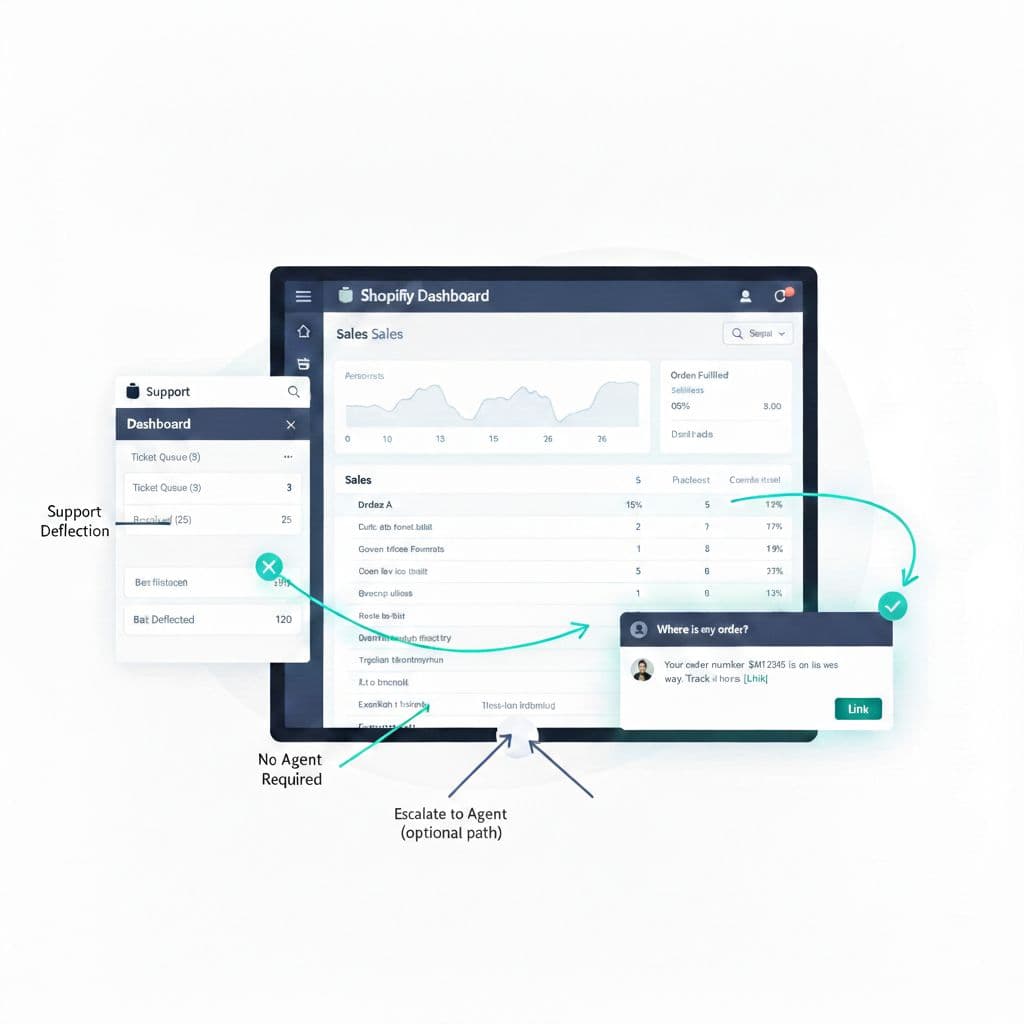
The Infrastructure of Conversational Routing in Shopify
Effective customer support automation requires a sophisticated routing infrastructure rather than a simple response mechanism. Routing mechanics dictate how a conversation flows based on the user profile. The system processes users by routing support issues to helpdesk for asynchronous resolution, while simultaneously routing high-intent buyers to live agents immediately.
The infrastructure succeeds by routing post-purchase customers differently than pre-purchase visitors. This prioritization logic based on intent and lifecycle stage ensures that revenue-generating queries bypass the standard support backlog. Proper routing protects revenue and reduces operational load by containing support queries within the automated layer. Recognizing the role of conversational interface layer is important ensures that operators treat the chatbot as an intelligent traffic controller.
What Most Shopify Chatbot Implementations Get Wrong
Common operational failures occur when brands make the mistake of treating chatbot as FAQ widget instead of routing infrastructure. When systems are configured merely to parrot knowledge base articles, they display poor routing logic where customers receive generic text instead of personalized account data or direct assistance.
Another critical failure is the failure to escalate high-intent users. If a buyer signals a desire to purchase but the system uses rigid scripts that break conversations, the sale is lost. Bad chatbots delay escalation; good chatbots accelerate it. These operational failures frustrate users and increase the overall support burden as customers bypass the bot to email support directly. Analyzing why website chatbots fail reveals that lacking a clear escalation path and relying on inflexible conversational trees are the primary drivers of negative customer experiences and lost revenue.
What Effective Shopify Chatbot Implementation Looks Like
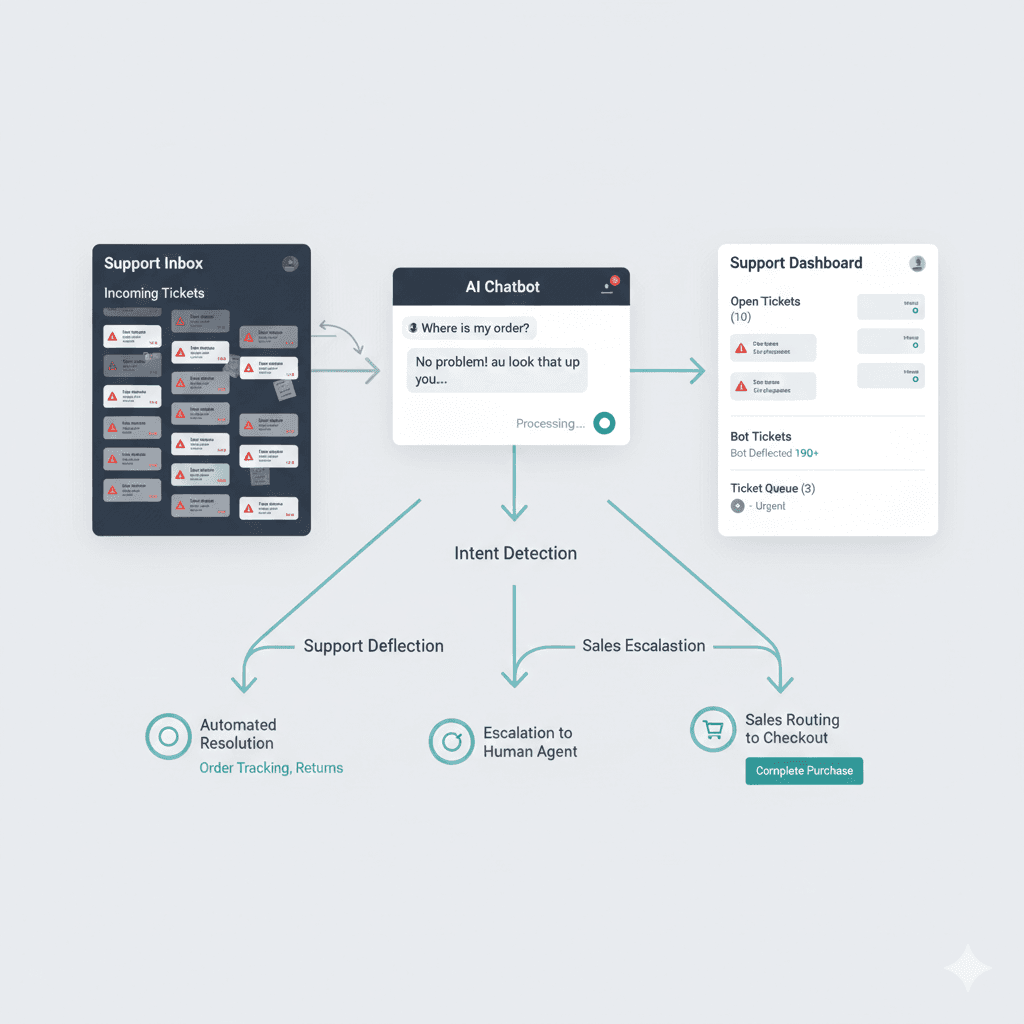
A correct system model follows a strict, logical sequence: Visitor -> Intent detection -> Automated resolution or escalation -> Proper routing -> Shopify data sync -> Issue resolved or purchase completed.
The visitor arrives, and the chatbot engages instantly. Once intent identified, the issue is either resolved automatically OR escalated. The conversation routed properly based on the user lifecycle stage, ensuring that support load reduced and conversion protected. Effective implementations are defined by specific operational characteristics including fast response speed, accurate routing, context awareness regarding the user cart, deep support integration, and conversion-focused behavior. Implementing the Steps AI Chatbot provides this exact structural model, acting as a deterministic system that synchronizes with Shopify data to protect both the support team and the revenue pipeline.
Conclusion
The ability to qualify leads and route conversations at scale is an operational necessity. Qualification speed preserves lead intent, while routing accuracy ensures that internal resources are allocated to the highest-impact opportunities. In the fitness industry, where purchase momentum is driven by confidence in equipment durability and software reliability, delay is the ultimate deal-killer. Organizations must evaluate their systems based on data accuracy, CRM depth, and the seamlessness of the hand-off between AI and human.
Implementing a Steps AI Chatbot allows companies to standardize this process, ensuring that no high-intent lead is left to stagnate in an inbox.
See how Steps AI Chatbot works
FAQs
How Shopify chatbots reduce support load and increase sales?
Shopify chatbots reduce support load by automatically resolving repetitive queries regarding shipping and returns without human intervention. They increase sales by instantly answering pre-purchase product questions, removing conversion friction, and routing high-intent buyers directly to checkout.
How does conversational routing prioritize different types of visitors?
Conversational routing analyzes user text to detect intent and lifecycle stage. It routes post-purchase support issues to a helpdesk for asynchronous resolution while instantly routing pre-purchase inquiries to live sales agents to capture active revenue.
Why do basic chatbot scripts fail to improve conversion rates?
Basic scripts fail because they trap users in rigid decision trees that cannot process complex or specific product queries. This inflexibility breaks conversations and forces high-intent buyers to abandon the session instead of completing their purchase.
Can the chatbot integrate with existing Shopify order data?
Yes. Operational chatbot infrastructure integrates directly with Shopify backend systems to securely access tracking numbers, order statuses, and return eligibility, allowing the automated system to resolve customer issues in real time.