
Customer support teams are under constant pressure to respond faster, resolve more issues, and maintain high customer satisfaction with limited resources. As expectations rise, many businesses are turning to website chatbots to help manage support demand.
Modern solutions like Steps AI Chatbot are changing how customer support teams operate. When implemented correctly, a website chatbot does not replace support teams. It reshapes workflows, improves efficiency, and allows human agents to focus on work that actually requires human judgment.
This article explains how website chatbots truly impact customer support teams, what changes when they are implemented correctly, and why poor implementations often do more harm than good.
Website Chatbots Reduce Support Ticket Volume at the Source
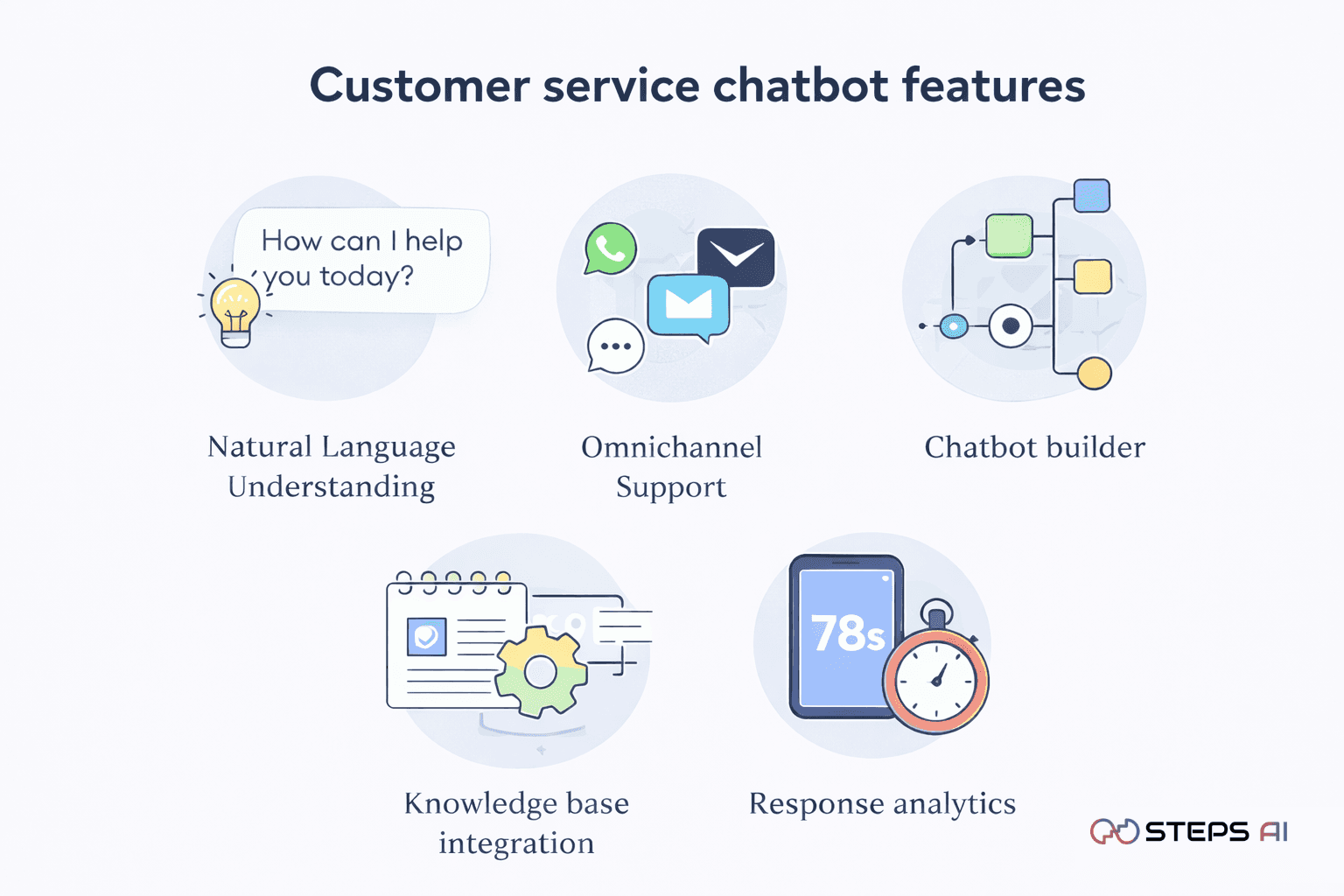
A large portion of customer support tickets come from repetitive, predictable questions. These include pricing clarifications, onboarding steps, feature explanations, and policy-related inquiries.
When a website chatbot is trained on real business content, it can resolve these questions instantly without creating a ticket. This reduces inbound volume before it reaches the support queue.
Steps AI Chatbot is designed to learn directly from website content and business data, allowing it to answer accurately and consistently. This prevents customers from submitting tickets simply because they could not find an answer quickly.
However, not all chatbots improve the experience. Poorly designed chatbots can frustrate users and increase support load. This is often the result of shallow implementations that lack context and flexibility. A deeper explanation of this problem is covered in When a Chatbot on Your Website Hurts Customer Experience.
Support Teams Spend More Time on High-Impact Issues
The real benefit of a website chatbot is not just fewer tickets. It is better allocation of human effort.
When routine questions are handled automatically, support agents are no longer overwhelmed by low-value interactions. Their focus shifts to complex issues that require investigation, empathy, or critical thinking.
With Steps AI Chatbot handling repetitive interactions, agents receive conversations that already include context, intent, and conversation history. This reduces back-and-forth and allows agents to resolve issues faster and with more confidence.
Over time, this shift improves agent satisfaction and reduces burnout, which is a growing challenge in customer support teams.
Faster Response Times Without Adding Headcount
Customers increasingly expect immediate responses. Long wait times are one of the fastest ways to erode trust.
A website chatbot provides instant first response, even outside business hours. Customers are acknowledged immediately, their intent is captured, and relevant information is collected.
Steps AI Chatbot ensures that when a conversation needs human involvement, the transition is seamless. Agents receive full context instead of starting from scratch. This improves perceived responsiveness without increasing staffing costs.
Better Context Creates Better Support Outcomes
One of the most common customer frustrations is having to repeat the same issue multiple times.
Traditional support flows often lose context between channels. Poor chatbot handoffs make this worse by collecting information that never reaches the agent.
Modern website chatbots solve this by acting as a context layer.
Steps AI Chatbot passes conversation history, detected intent, and relevant inputs directly to the support team. This continuity allows agents to focus on resolution instead of information gathering.
Consistency Improves Trust and Reduces Errors

Human support responses naturally vary. Different agents may explain policies differently or miss details under pressure.
A website chatbot trained on authoritative business content provides consistent, accurate answers across the website. This reinforces approved messaging and reduces the risk of misinformation.
Many chatbot failures occur because businesses rely on generic or static scripts that do not evolve with the business. This distinction is explored further in AI Chatbot for Website vs Traditional Chatbots.
Steps AI Chatbot avoids this issue by continuously learning from live website content, ensuring responses stay aligned with current offerings and policies.
Chatbot Analytics Give Support Teams Visibility
Website chatbots generate valuable insight into customer behavior.
They reveal what customers ask most often, where confusion occurs, and which issues repeatedly lead to escalation. This data is difficult to extract from tickets alone.
Steps AI Chatbot provides analytics that help support teams identify gaps in documentation, onboarding, and self-service. These insights allow teams to fix problems proactively instead of reacting to them repeatedly.
Ignoring this data is one of the reasons many chatbot implementations fail. This broader issue is explored in Why Website Chatbots Fail.
Website Chatbots Support Teams Instead of Replacing Them
A common misconception is that chatbots exist to eliminate human support roles.
In reality, the most successful chatbot implementations strengthen support teams. Chatbots handle volume, repetition, and routing. Humans handle complexity, judgment, and relationship-building.
Steps AI Chatbot is designed with this balance in mind, ensuring automation supports humans rather than competing with them.
How Website Chatbots Fit Into Modern Support Operations
Website chatbots are no longer standalone widgets. They are becoming a core part of how businesses manage customer interactions.
When aligned with clear goals, chatbot conversations guide users toward resolution, escalation, or action instead of ending passively. This broader role is explained in What a Website Chatbot Does for Modern Businesses.
For customer support teams, this means fewer repetitive tickets, faster resolution times, and better overall experience for both customers and agents.
Final Thoughts
Website chatbots have a real and measurable impact on customer support teams when implemented with intention.
The difference between success and failure lies in strategy, training, context, and continuous optimization.
Steps AI Chatbot helps businesses move beyond shallow automation and build a support system that reduces friction, improves efficiency, and empowers human teams.
For modern customer support operations, a well-designed website chatbot is no longer optional. It is becoming a foundational layer of the support experience.
Frequently Asked Questions
How do website chatbots impact customer support teams?
Website chatbots reduce repetitive support tickets, provide instant responses, and capture context before escalation. This allows support teams to focus on complex issues while maintaining faster response times and consistent answers.
Do website chatbots replace customer support agents?
No. Website chatbots are designed to support human agents, not replace them. They handle repetitive questions and information gathering so agents can focus on problem-solving, empathy, and high-value interactions.
How does Steps AI Chatbot help customer support teams?
Steps AI Chatbot helps by resolving common questions instantly, passing full context to agents during handoff, and providing analytics that reveal customer pain points. This improves efficiency, resolution speed, and overall support quality.
Can website chatbots actually reduce support ticket volume?
Yes. A well-trained website chatbot can resolve a large percentage of repetitive inquiries before a ticket is created, significantly reducing inbound support volume without harming customer experience.
Why do some website chatbots frustrate customers?
Chatbots frustrate customers when they rely on rigid scripts, lack business-specific knowledge, or fail to understand intent. Poor handoff to human agents also contributes to negative experiences.
What makes a website chatbot effective for customer support?
An effective website chatbot is context-aware, trained on real business content, aligned with support goals, and continuously optimized using analytics. It guides users toward resolution instead of acting as a passive widget.
How do chatbots improve first response time?
Website chatbots provide instant engagement the moment a customer visits the site, even outside business hours. This immediate response improves perceived support quality and reduces customer frustration.
Why is context important in chatbot to human handoff?
Context prevents customers from repeating themselves. When conversation history and intent are passed to agents, resolution is faster and the experience feels seamless rather than fragmented.
How can businesses measure chatbot success in customer support?
Success is measured through reduced ticket volume, faster first response times, improved resolution rates, lower agent workload, and higher customer satisfaction scores.
Are website chatbots suitable for all customer support teams?
Yes, but only when implemented strategically. Businesses that treat chatbots as part of their support system, not just a tool, see the strongest results.